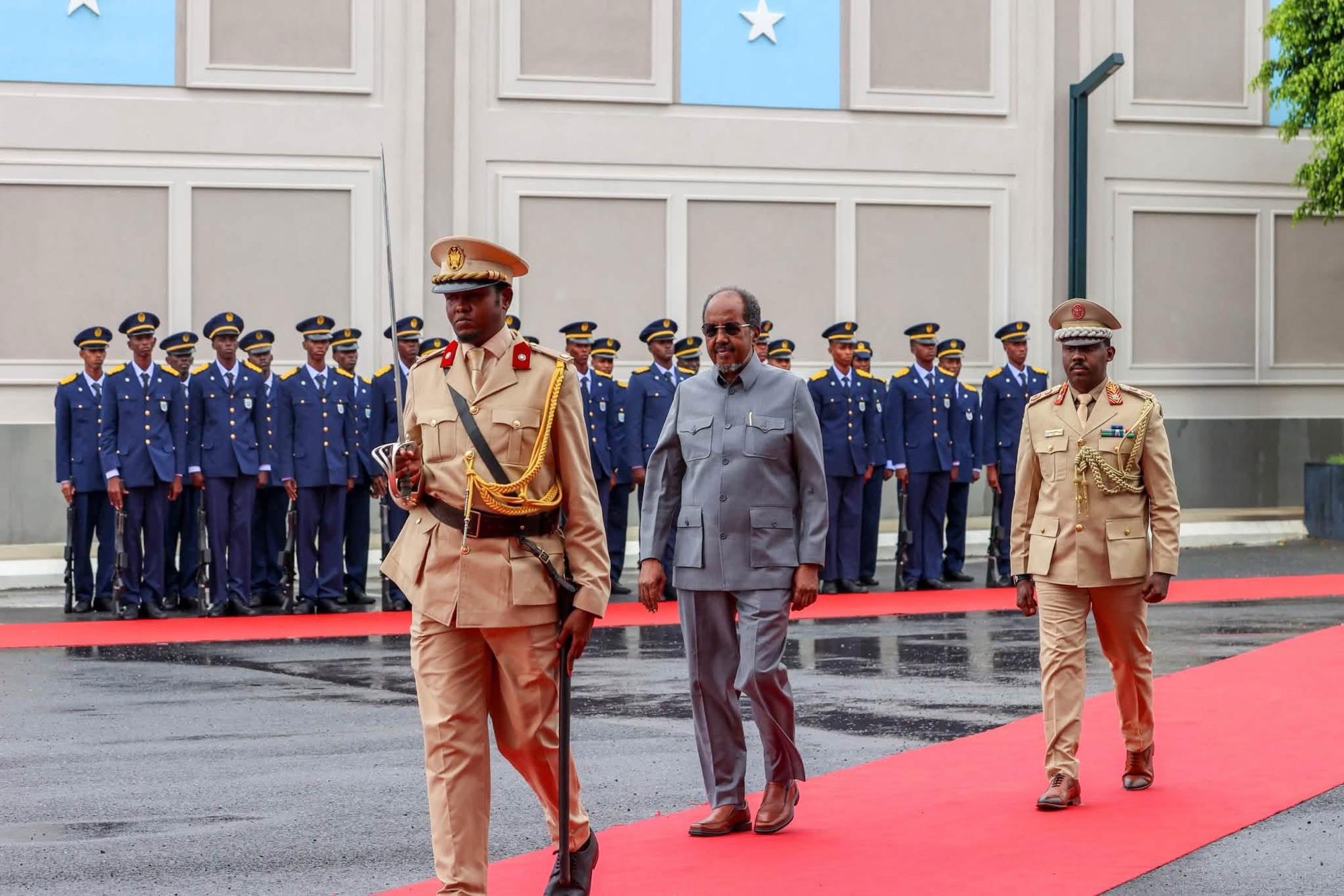
MOGADISHU, October 12, 2026 — Somali President Hassan Sheikh Mohamud has attended a national ceremony marking Somali Flag Day, an annual occasion celebrating the country’s sovereignty, national identity and unity.
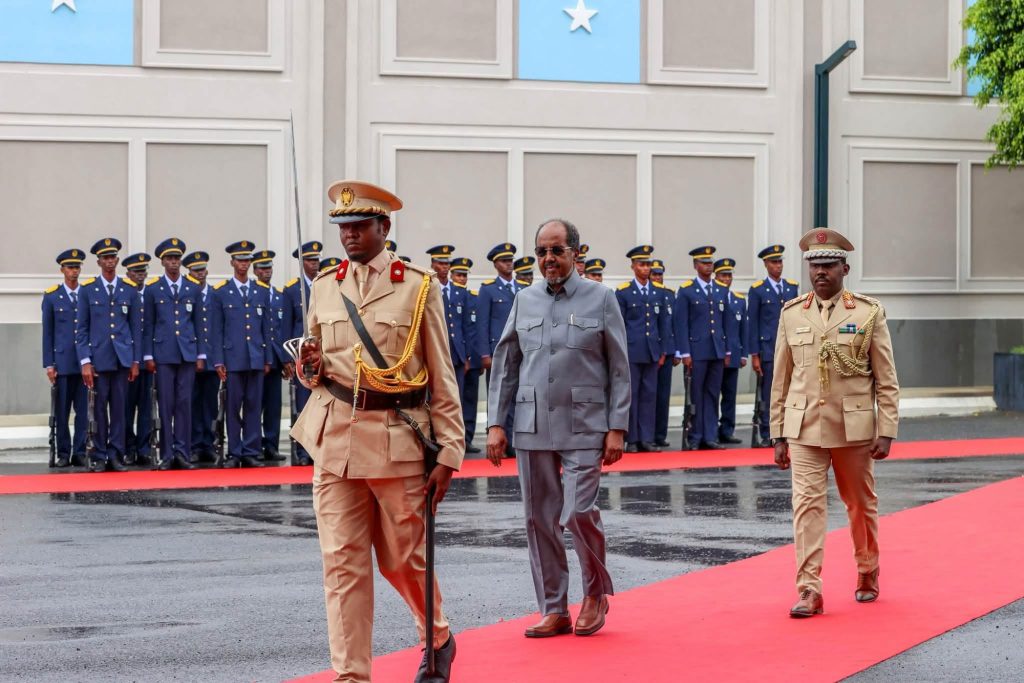
The ceremony was held at the presidential palace in Mogadishu and featured members of the Somali National Armed Forces, including personnel representing the army, air force and navy. Military units took part in a formal display highlighting their stated commitment to defending Somalia’s sovereignty, territorial integrity and national institutions.
Speaking at the event, Hassan Sheikh underscored the historical significance of October 12 and the role of the national flag as a symbol of Somali identity and independence.
He described the flag as a representation of national unity, the aspirations of the independence movement and the sacrifices made by those who struggled to free the country from colonial rule.
Senior government and judicial officials also attended the ceremony, including the speaker of the House of the People, the first deputy speaker of the Upper House, the prime minister, the chief justice of the Supreme Court and senior military commanders.
A Symbol of Independence and National Identity
Somali Flag Day provides an opportunity to reflect on the country’s struggle for independence and the significance of national symbols in shaping a shared identity.
The Somali flag, characterised by its blue background and white five-pointed star, has long represented the aspirations of Somali nationalism. The star’s five points are traditionally associated with the five territories inhabited by ethnic Somalis, reflecting the historical idea of a unified Somali nation across territorial boundaries.
The flag’s significance extends beyond official ceremonies. It remains a symbol of national belonging for Somalis at home and across the diaspora, where questions of identity, unity and the country’s political future continue to resonate.
National Unity Amid Political and Security Challenges
The ceremony comes as Somalia continues to confront significant political, security and institutional challenges. Efforts to strengthen federal institutions, address security threats and advance national reconciliation remain central to the country’s political agenda.
Against this backdrop, national commemorations offer political leaders an opportunity to reinforce messages of unity and sovereignty. However, the broader significance of such messages depends on how effectively national institutions translate these principles into inclusive governance, public security and political cooperation.
For Somalia, the flag represents both the achievement of independence and the continuing aspiration to build a stable state capable of bringing its citizens together across regional, political and social divisions.
The central question remains whether the ideals represented by the national flag can be reflected in the country’s political institutions and everyday realities.