By THE SOMALI | Analysis
MOGADISHU, Somalia — November 17, 2026
Somalia is seeking to strengthen another front in its fight against Al-Shabaab, shifting greater attention towards the ideological foundations of extremism through expanded cooperation with Saudi Arabia.
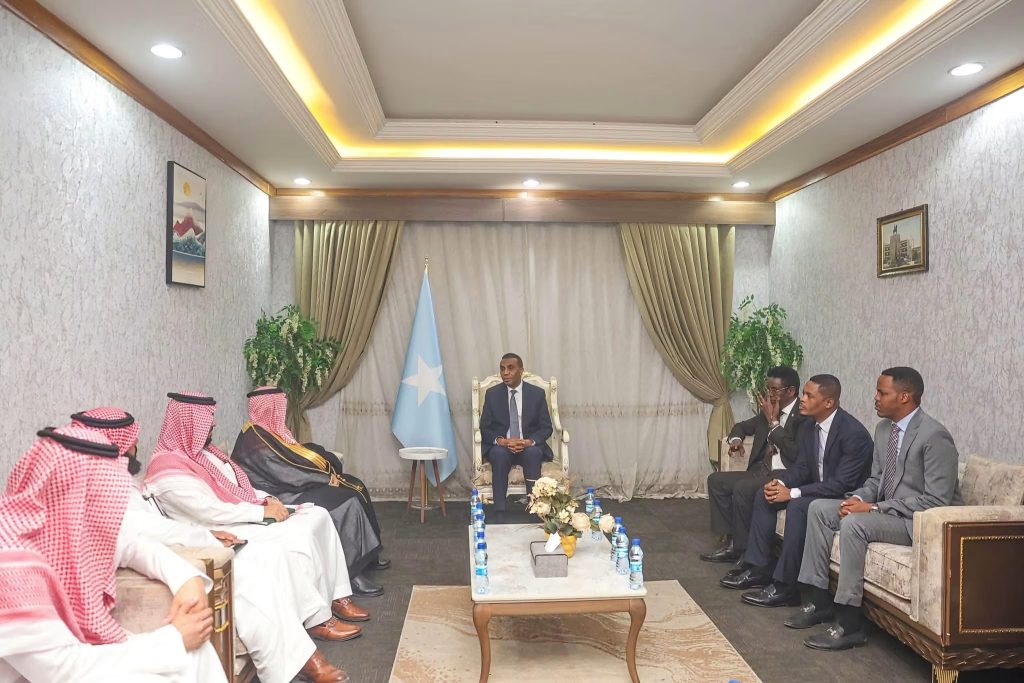
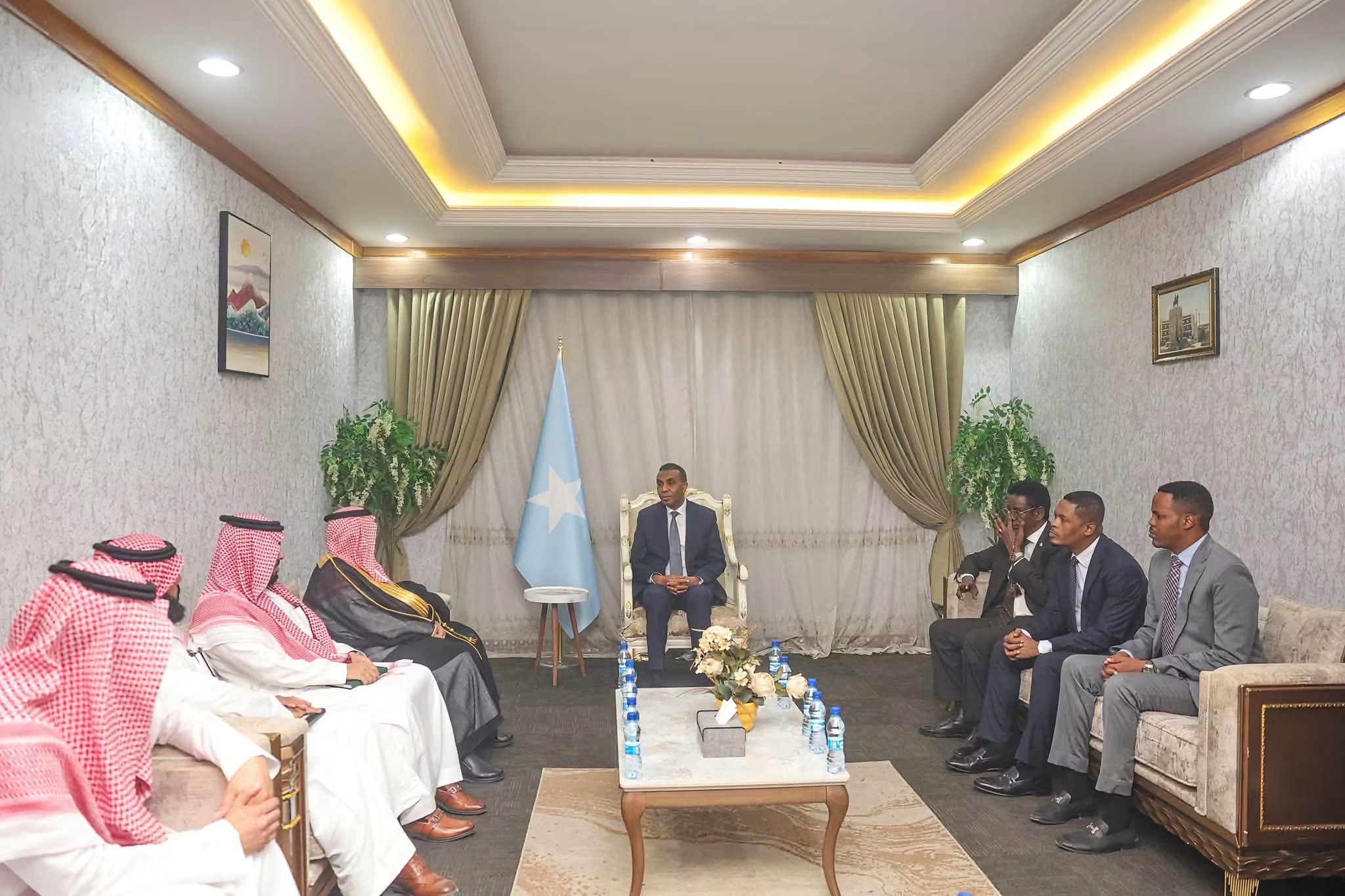
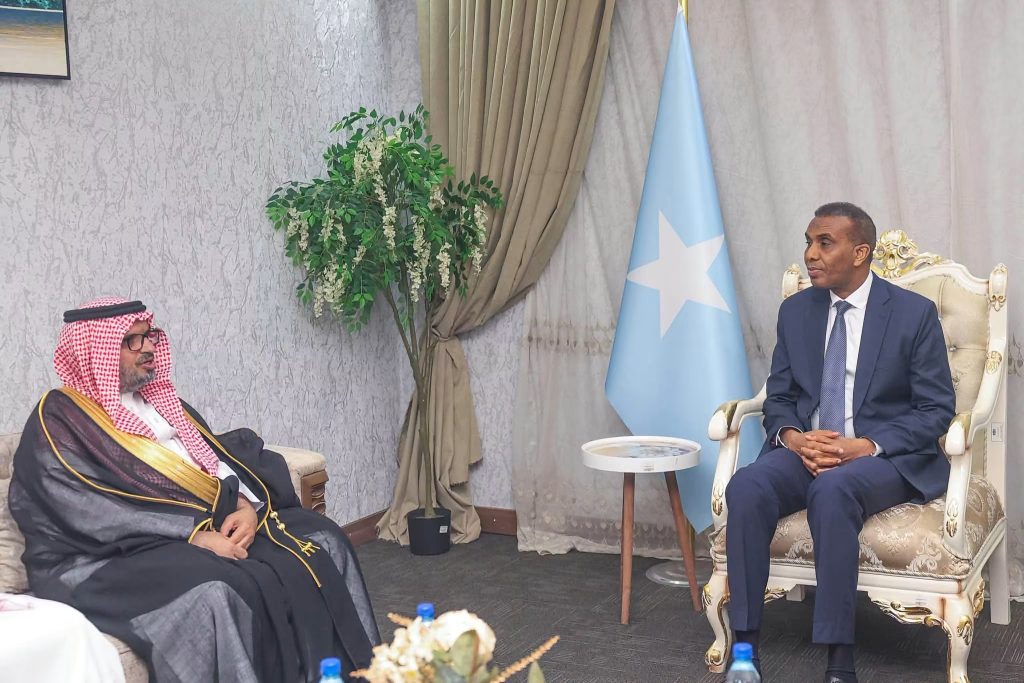
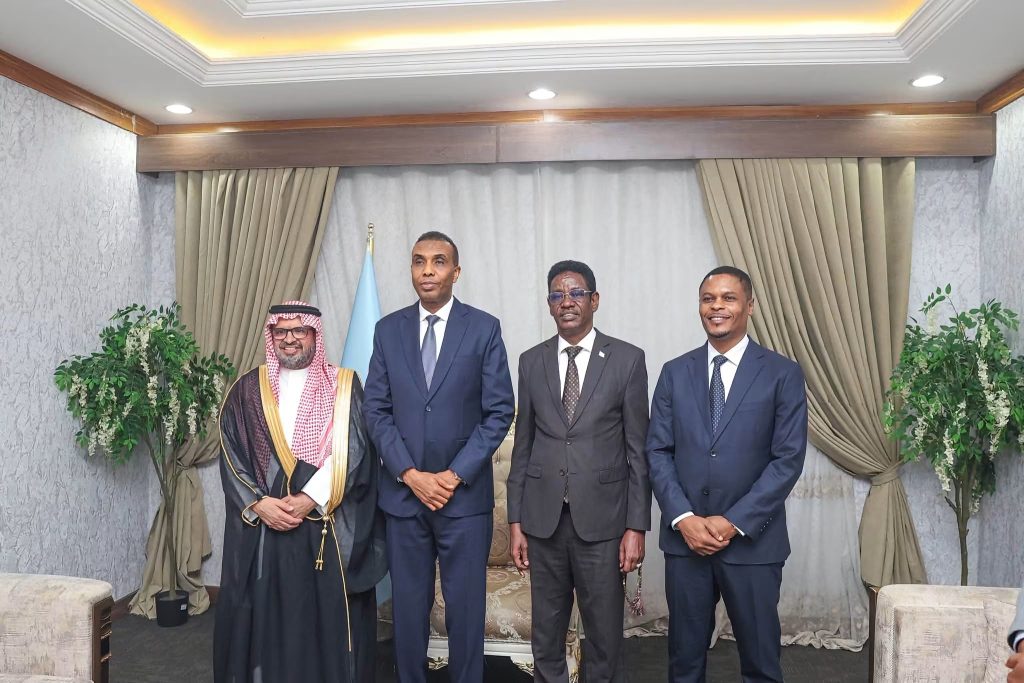
The development follows a meeting on Tuesday, November 17, between Somali Prime Minister Hamza Abdi Barre and a Saudi delegation led by Major General Abdullah bin Hadi Al-Hajri, Secretary-General of Saudi Arabia’s Global Center for Combating Extremist Ideology.
During the meeting in Mogadishu, discussions focused on Somalia’s efforts to counter extremist narratives and the possibility of benefiting from Saudi Arabia’s experience in addressing radical ideology. The Saudi delegation expressed its readiness to support Somalia through technical expertise, awareness campaigns, personnel training and other forms of assistance.
The meeting reflects an important dimension of Somalia’s broader security strategy: confronting extremist organizations not only through military operations but also by challenging the narratives, recruitment methods and ideological influence that sustain them.
Beyond Military Operations
For years, Somalia’s campaign against Al-Shabaab has relied heavily on military operations, security partnerships and efforts to regain control of territory. However, the persistence of the group demonstrates that military pressure alone cannot address every dimension of the conflict.
Al-Shabaab has developed networks of influence that extend beyond the battlefield. Its recruitment strategies, propaganda, exploitation of local grievances and manipulation of religious narratives have contributed to its continued ability to attract and retain supporters.
This makes countering extremist ideology an important part of any long-term strategy.
Through public awareness initiatives, community engagement and institutional training, Somalia could strengthen its capacity to challenge extremist messaging before it develops into support for violence.
However, such efforts require more than government statements. They depend on public trust, credible religious leadership, education and meaningful engagement with communities.
Saudi Arabia’s Expanding Role
Saudi Arabia’s involvement brings another dimension to its relationship with Somalia.
The Kingdom has maintained diplomatic, economic and development ties with Mogadishu, while its engagement in countering extremist ideology has also developed through specialised institutions.
The Global Center for Combating Extremist Ideology, known as Etidal, was established in Riyadh in 2017. Its work focuses on confronting extremist ideology through intellectual engagement, communication and efforts to challenge extremist content.
Its experience could offer Somalia technical knowledge and institutional support, particularly in developing awareness programmes and training personnel working in the prevention of violent extremism.
For Riyadh, cooperation with Somalia also represents engagement with a country that remains central to security discussions in the Horn of Africa and the wider Red Sea region.
Nevertheless, the extent of Saudi Arabia’s contribution and the practical structure of the proposed cooperation remain to be clarified.
Strengthening Somalia’s Own Institutions
One of the most important aspects of the meeting is the potential role of Somalia’s national institutions responsible for preventing and countering violent extremism, particularly the Tubsan Center.
International expertise can contribute to institutional development, but sustainable progress will depend on Somalia’s ability to build its own capacity.
This includes training specialists, improving public communication, supporting credible community initiatives and developing programmes that address the factors making vulnerable individuals susceptible to extremist recruitment.
Religious scholars, educators, civil society organisations and local communities will also have an important role.
Efforts to counter extremist ideology must be carefully designed to distinguish violent extremism from legitimate religious expression and peaceful public discourse. Maintaining that distinction is essential for public confidence.
The Implementation Challenge
While the meeting signals an intention to deepen cooperation, several important questions remain unanswered.
There has been no publicly detailed breakdown of the proposed financial commitments, the duration of the partnership, its implementation framework or specific performance targets.
It is also unclear how the training programmes will be structured and which institutions will receive direct support.
These details will determine whether the discussions develop into a sustained national programme or remain primarily a diplomatic commitment.
For Somalia, the challenge is to translate international cooperation into practical results that can be felt at the community level.
A Broader Approach to National Security
Somalia’s security challenges cannot be separated from its wider political, economic and social conditions. Unemployment, limited educational opportunities, weak institutions and unresolved local grievances can create vulnerabilities that extremist organisations may exploit.
Consequently, countering violent extremism requires a broader approach that combines security measures with education, economic opportunity, institutional accountability and community participation.
The partnership with Saudi Arabia could contribute to this effort by providing technical experience and additional institutional support.
Ultimately, the success of the cooperation will not be measured by the number of meetings held or agreements announced, but by whether it strengthens Somalia’s ability to prevent recruitment, challenge extremist propaganda and build lasting resilience within its communities.
For Somalia, the battle against extremism is increasingly recognised as one that must be fought both on the battlefield and in the minds of the people.