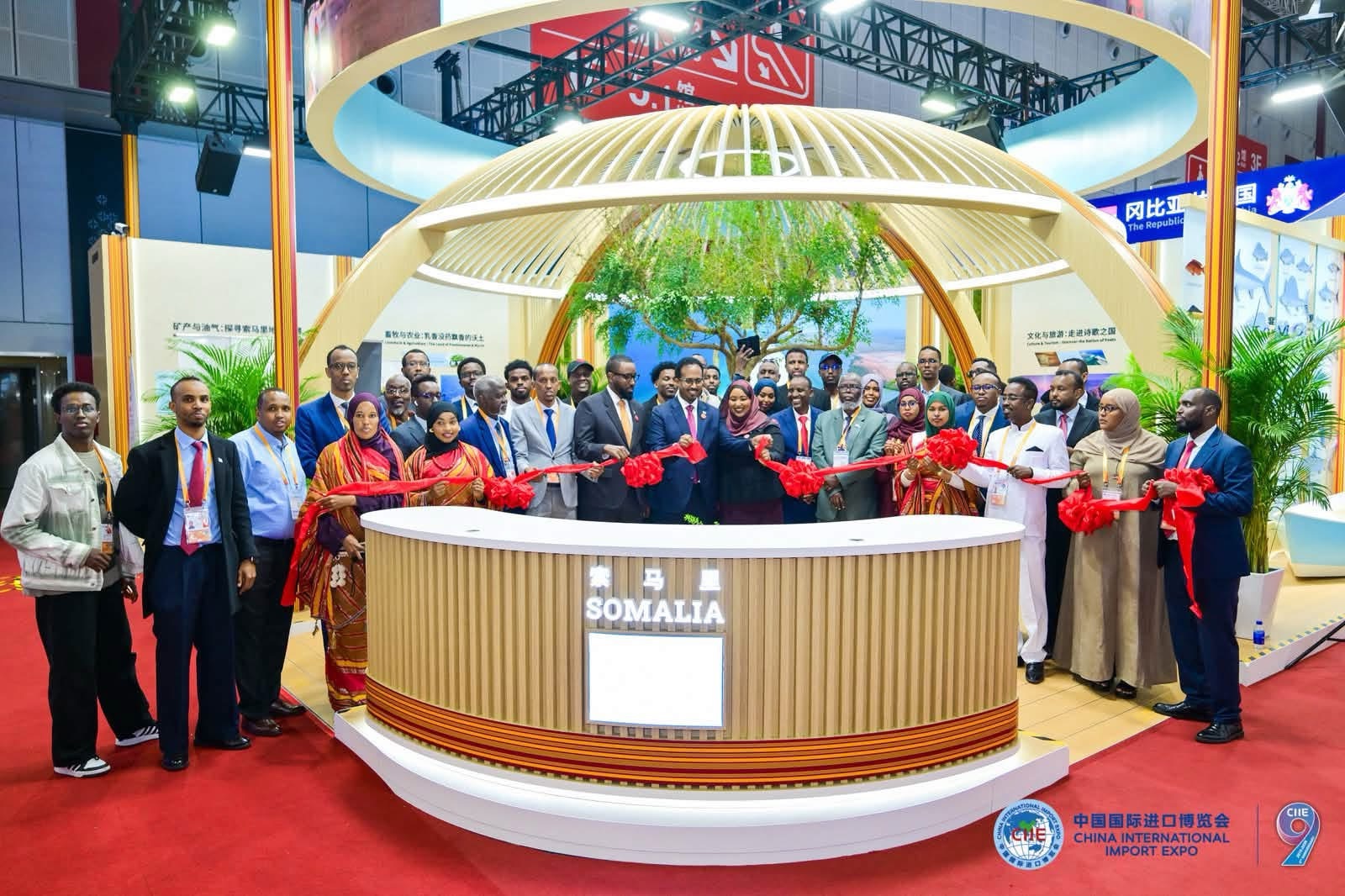
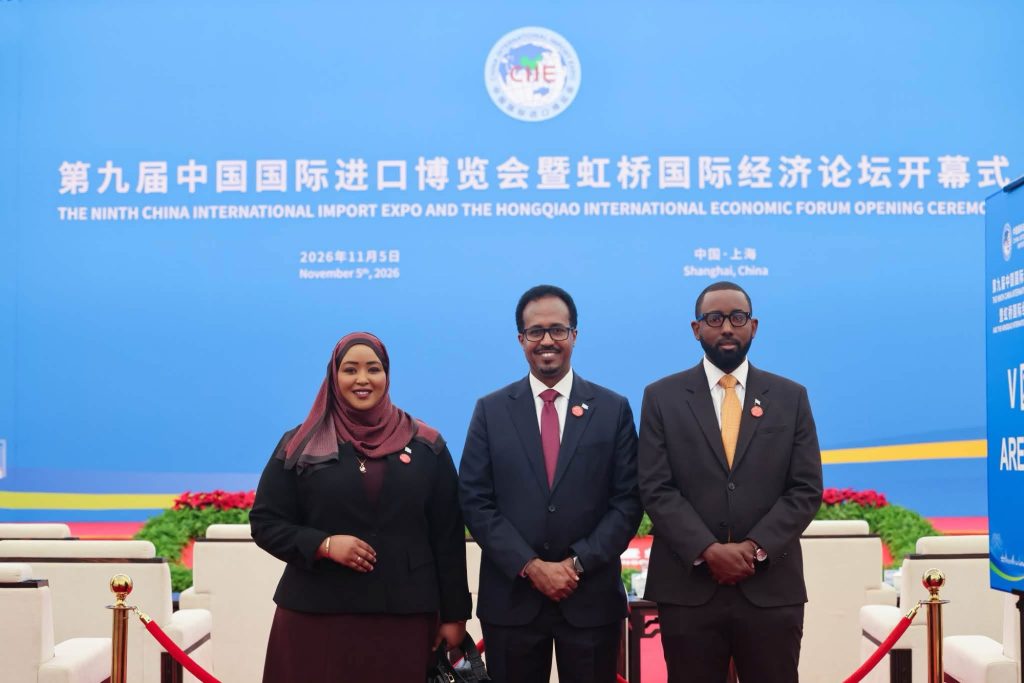
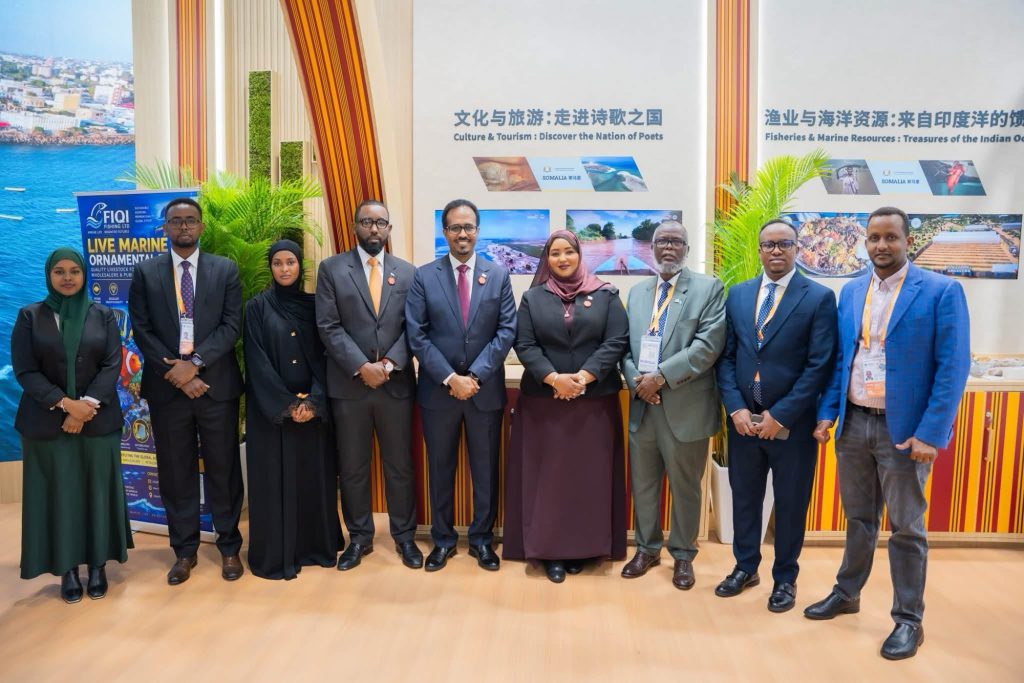
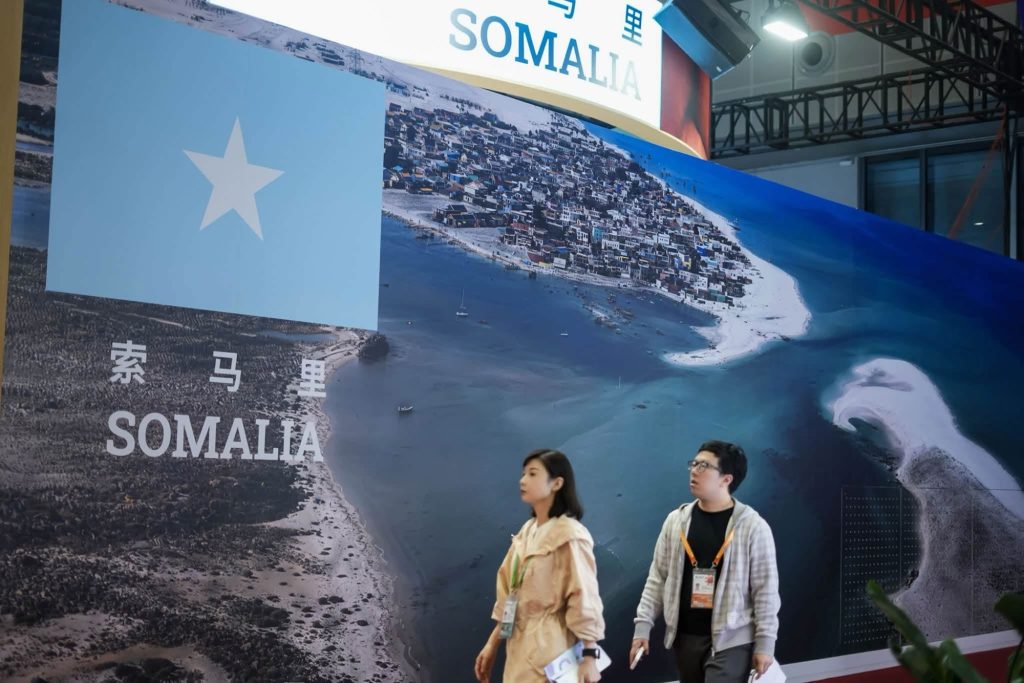
SHANGHAI, China, November 5, 2026 – Somalia has opened its first-ever national pavilion at the China International Import Expo (CIIE) in Shanghai, marking an important milestone in the country’s efforts to promote its products, attract foreign investment and strengthen trade relations with China.
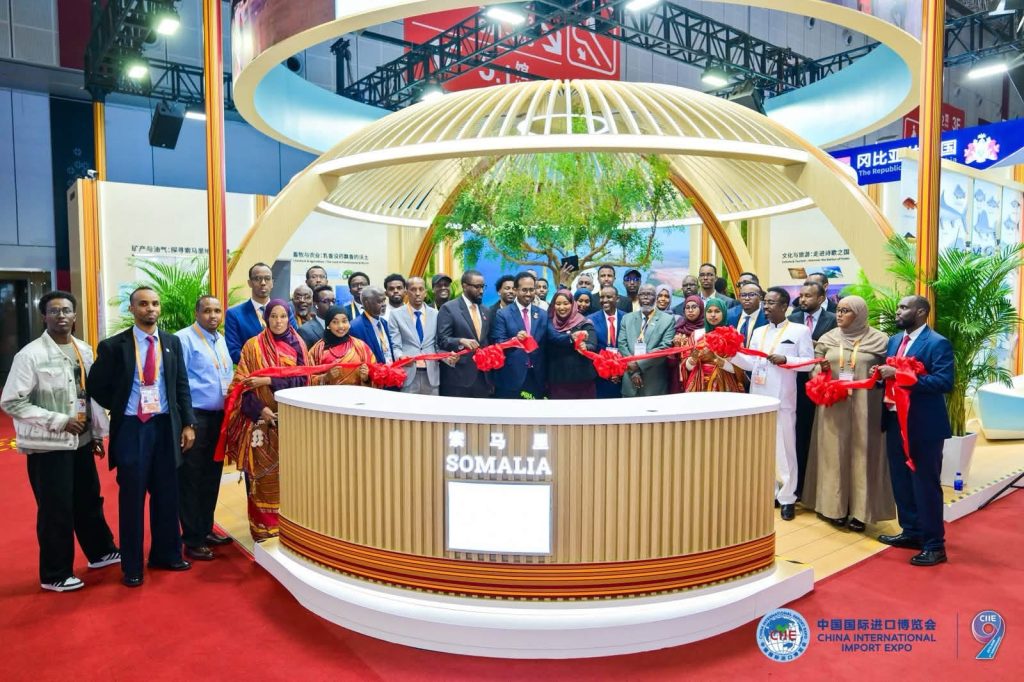
Led by the Minister of Commerce and Industry, Ambassador Jamaal Mohamed Hassan, alongside Somalia’s Ambassador to China, Dr Hodan Osman Abdi, the Somali delegation is presenting the country’s agricultural products, natural resources and investment opportunities to an international audience.
The pavilion brings Somali products, including sesame seeds, frankincense and myrrh, to the attention of Chinese businesses and international investors. Opportunities in livestock, fisheries and minerals are also being promoted.
With representatives from 164 countries and nearly 5,000 companies participating in this year’s exhibition, the event offers Somalia an opportunity to establish commercial relationships in one of the world’s largest consumer markets.
However, while establishing a Somali presence at an international trade exhibition is a positive development, the country’s ambitions must extend beyond showcasing its products. The real measure of success will be whether Somalia can secure export agreements, attract productive investment and build the domestic capacity needed to supply international markets consistently.
Somalia Has More to Offer Than It Currently Exports
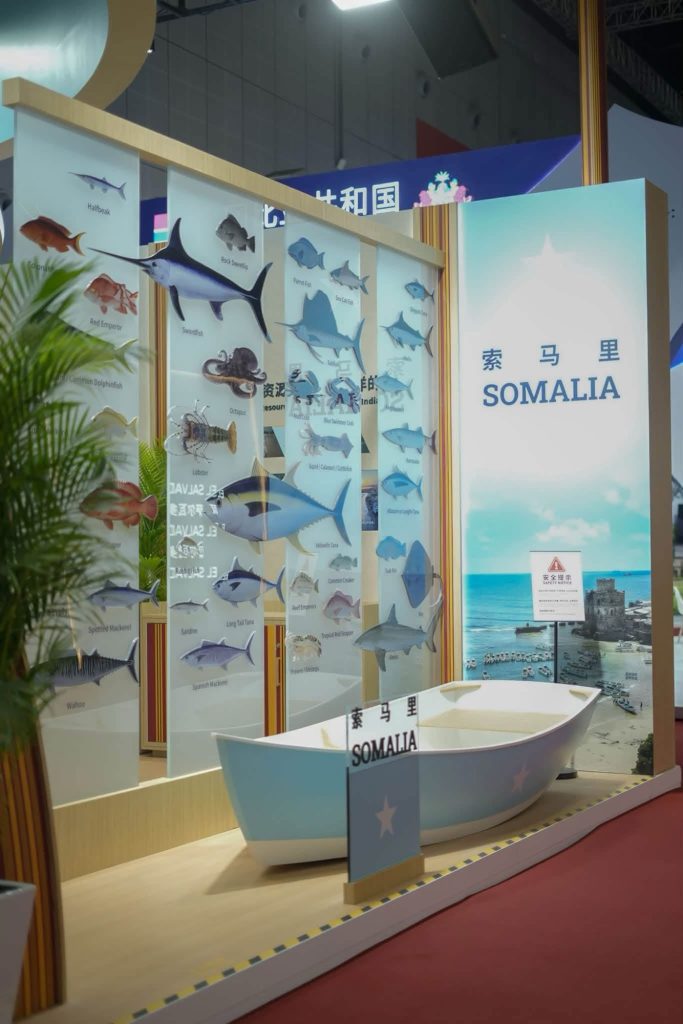
Somalia possesses considerable agricultural and natural-resource potential that remains underdeveloped.
Its livestock sector is one of the country’s most important economic assets. Somalia has substantial populations of camels, cattle, sheep and goats, supporting millions of livelihoods and providing products with considerable international market potential.
The country also has an extensive coastline along the Indian Ocean and the Gulf of Aden, offering access to a wide variety of fish species and other marine resources.
These assets could support a much larger export economy, particularly as international markets seek reliable suppliers of agricultural products, livestock and seafood.
Yet possessing natural resources is not the same as having the capacity to compete in international markets.
Exporting successfully requires consistent production, quality control, modern processing facilities, reliable transportation, certification and compliance with the importing country’s regulations.
This is where Somalia’s economic development strategy must become more ambitious.
From Trade Exhibitions to Actual Export Agreements
The immediate priority following Somalia’s participation in CIIE should be securing tangible commercial agreements with Chinese importers, wholesalers, food-processing companies and investors.
Somali officials should use the exhibition to negotiate long-term purchasing arrangements for products such as sesame, frankincense, myrrh, livestock products and seafood.
Rather than measuring success by the number of officials attending exhibitions or the visibility of the Somali pavilion, the government should measure progress through export contracts, investment commitments, new buyers and the volume of goods entering foreign markets.
For example, an agreement allowing Somali sesame producers to supply a Chinese food-processing company on a regular basis would represent a more meaningful economic achievement than simply displaying sesame at an exhibition.
Similarly, partnerships with Chinese seafood companies could help develop Somalia’s fishing industry through investment in modern fishing vessels, cold-storage facilities, processing plants and transportation infrastructure.
Such agreements would create opportunities not only for large businesses but also for farmers, pastoralists, fishermen and small-scale entrepreneurs.
Modernising Agriculture and Livestock Production
If Somalia wants to become a competitive agricultural and livestock exporter, it must modernise how its products are produced.
Traditional farming and livestock herding continue to support large sections of the population. However, increasing production and meeting international quality standards will require investment in modern machinery, irrigation, animal health services, storage and processing facilities.
Agricultural mechanisation could improve productivity, reduce production costs and allow farmers to cultivate larger areas of land.
In the livestock sector, investment in veterinary services, animal disease prevention, modern breeding techniques, improved feeding systems and livestock management would help improve the quality and reliability of products destined for international markets.
Somalia should also develop modern slaughterhouses, meat-processing facilities and cold-chain transportation systems to increase the value of its livestock exports.
The objective should be to move beyond exporting animals and raw agricultural products towards developing industries that process, package and add value to Somali resources before they reach international markets.
This would allow Somalia to capture a greater share of the value generated by its own natural resources.
Government Incentives to Make Somali Exports Competitive
The government has an important role in creating an environment where domestic producers can compete internationally.
One option is to introduce targeted tax incentives for export-oriented businesses, particularly those investing in agriculture, fisheries, livestock processing and manufacturing.
Tax relief on qualifying export activities, reduced duties on agricultural machinery and industrial equipment, and incentives for businesses investing in processing facilities could encourage domestic production.
Access to affordable financing is equally important. Small farmers, livestock traders and fishing businesses often lack the capital required to expand production or purchase modern equipment.
The government could work with financial institutions and international development partners to establish financing programmes that support productive sectors and export-oriented businesses.
These measures should be transparent, targeted and linked to measurable improvements in production, employment and exports.
Protecting Domestic Producers Without Isolating the Economy
Another important consideration is Somalia’s approach to imports.
The country imports substantial quantities of agricultural and food products, including goods that could potentially be produced domestically.
Where Somali farmers and businesses have the capacity to supply the domestic market, the government should consider policies that encourage local production and reduce unnecessary dependence on imports.
This could include carefully designed import regulations, targeted tariffs and temporary protective measures for developing industries.
However, such policies must be evidence-based. Restricting imports without first ensuring adequate domestic production could increase food prices, reduce consumer choice and create shortages.
The objective should not be to close Somalia’s market to foreign goods. Rather, it should be to create fair conditions in which Somali producers can develop, expand production and gradually compete with imported products.
Import substitution should therefore go hand in hand with investment in agricultural productivity, infrastructure and domestic processing.
The Infrastructure Challenge
Perhaps the biggest obstacle to Somalia’s export ambitions is the limited infrastructure and industrial capacity needed to move products from farms, fishing communities and livestock markets to international buyers.
Reliable roads, electricity, water supply, ports, storage facilities, refrigerated transportation and modern processing plants are essential components of a successful export economy.
For example, expanding seafood exports requires more than access to fish. It requires modern fishing equipment, hygienic processing facilities, refrigeration and a reliable cold chain to preserve products during transportation.
Similarly, agricultural exports require irrigation, warehouses, processing facilities and effective transportation networks.
The government should therefore use trade exhibitions such as CIIE to attract investors who are willing to establish productive businesses and develop infrastructure inside Somalia.
Foreign investment should not be limited to extracting and exporting raw resources. It should contribute to building local industries, transferring technology, training workers and creating employment.
A National Export Strategy Is Needed
Somalia’s participation in CIIE should be part of a broader national export strategy rather than an isolated diplomatic or promotional exercise.
The Ministry of Commerce and Industry should work closely with the Ministry of Agriculture, the Ministry of Livestock, Fisheries and Blue Economy, the private sector and regional administrations to identify priority export products and develop practical plans for each sector.
Such a strategy should establish clear targets for export growth, identify international markets, improve product certification, support producers and attract investment into processing and logistics.
It should also establish mechanisms for following up on commercial contacts made during international exhibitions.
The government should be able to report how many export agreements have been secured, how much investment has been attracted, how many businesses have entered new markets and how many jobs have been created.
These are the indicators that will demonstrate whether international trade promotion is delivering real economic benefits.
The Opportunity Must Translate into Economic Transformation
Somalia’s first national pavilion at the China International Import Expo is an important achievement. It demonstrates a willingness to engage with international markets and promote the country’s economic potential.
But international visibility alone cannot transform an economy.
Somalia needs a shift from promoting what the country possesses to developing the capacity to produce, process and export it competitively.
Its livestock, fisheries, agricultural products and natural resources offer a foundation upon which a stronger export economy can be built.
The challenge now is to turn diplomatic engagement into commercial agreements, investment into productive industries and natural resources into sustainable economic opportunities.
The success of Somalia’s presence in Shanghai should ultimately not be judged by how many products are displayed in its pavilion, but by how many Somali products subsequently reach Chinese markets, how many businesses are established at home and how many livelihoods benefit from the expansion of international trade.