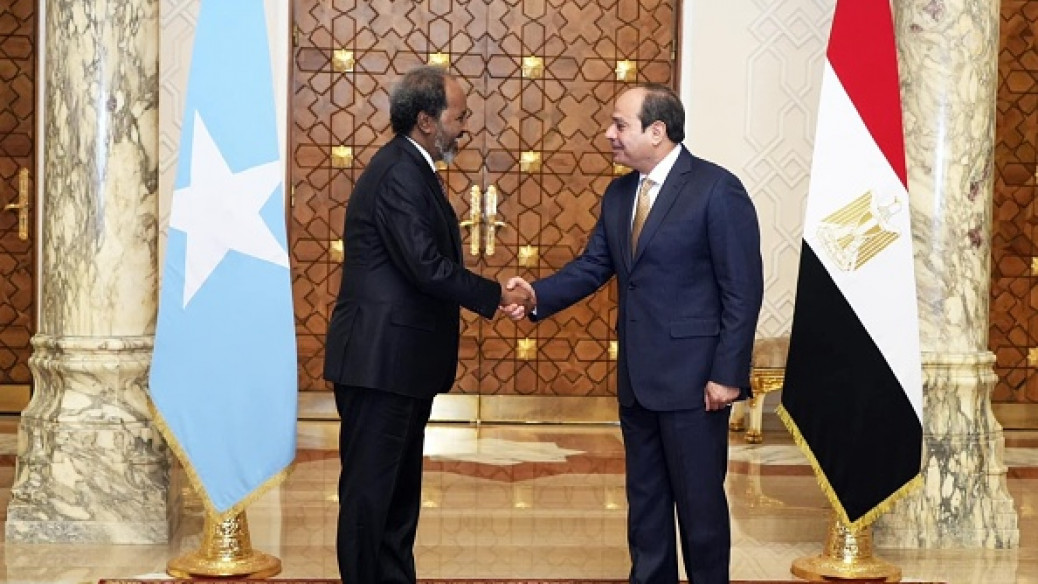
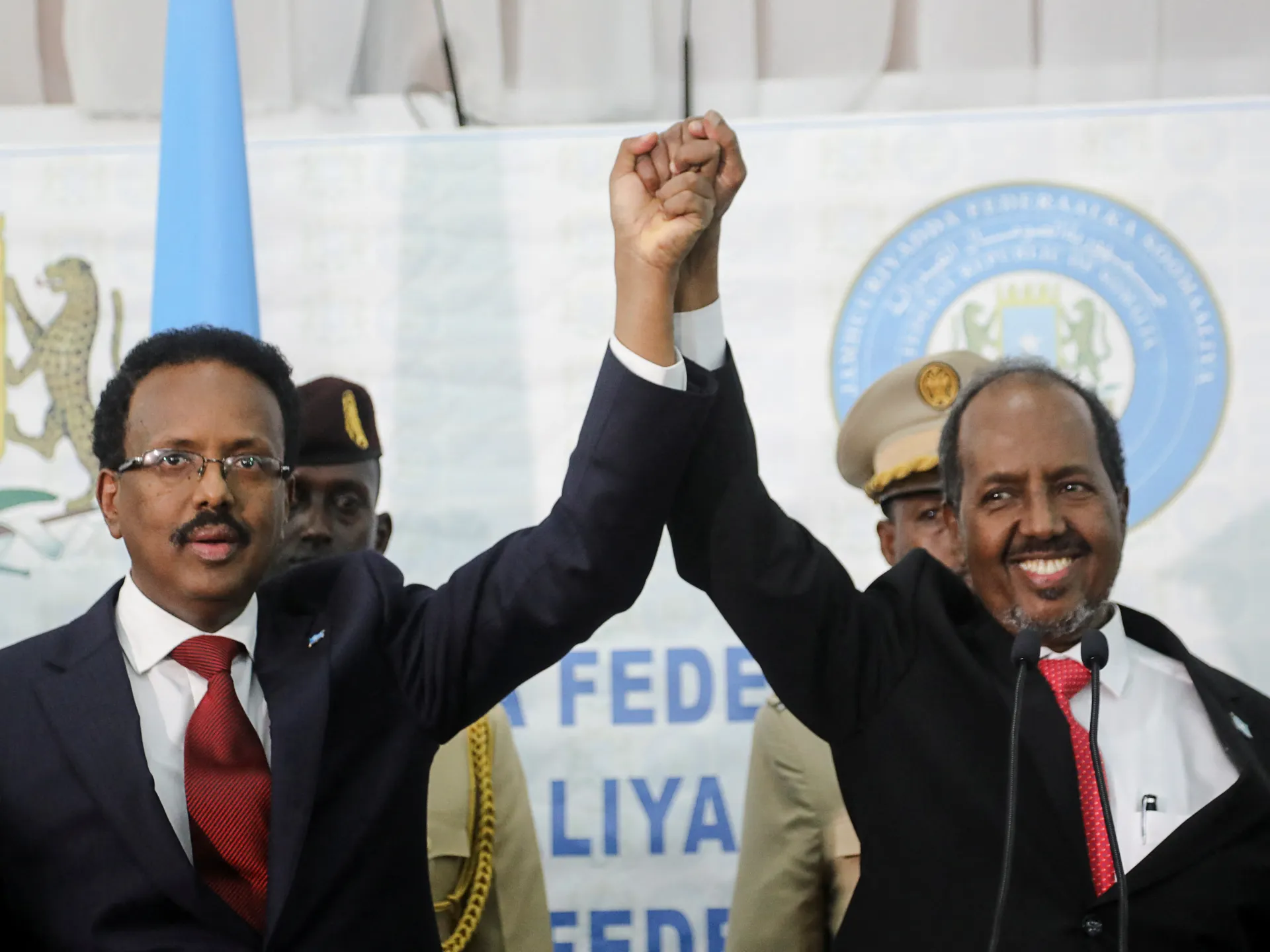
Nairobi — Four leaders from some of the Horn of Africa and Red Sea’s most strategically important countries are meeting in Egypt’s coastal city of El Alamein at a moment when the region appears to be moving towards another dangerous confrontation.
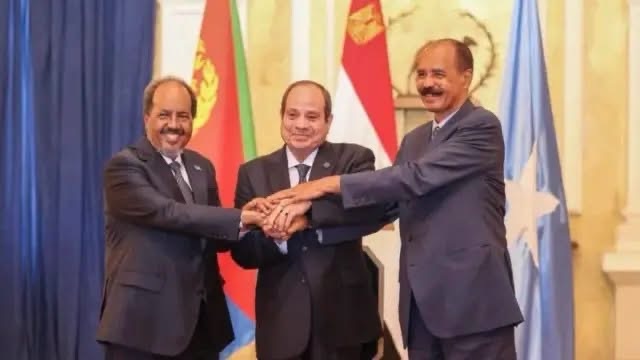
Egyptian President Abdel Fattah el-Sisi, Eritrean President Isaias Afwerki, Sudan’s Abdel Fattah al-Burhan and Somali President Hassan Sheikh Mohamud are holding consultations on regional affairs, with the Egyptian presidency describing the meeting as an effort to coordinate on issues of common interest.
But the timing is difficult to ignore.
Northern Ethiopia is again at war. Ethiopia and Eritrea have severed diplomatic ties. Addis Ababa has accused Eritrea, Sudan and Egypt of supporting forces fighting the Ethiopian government — allegations the three countries reject. And Ethiopia’s federal forces have now retaken Mekelle after Tigrayan forces withdrew from the city.
The question, therefore, is not simply what the four leaders are discussing.
It is what kind of regional alignment could emerge from El Alamein.
A new regional equation
The Horn of Africa has seen alliances shift repeatedly over the past decade.
Eritrea once fought alongside Ethiopia’s federal forces against the Tigray People’s Liberation Front. Egypt and Ethiopia have spent years locked in a dispute over the Grand Ethiopian Renaissance Dam. Sudan is fighting its own devastating war and accuses Ethiopia of supporting its rival Rapid Support Forces.
Somalia, meanwhile, has been strengthening its strategic relationship with Egypt while maintaining important relations with Ethiopia.
These interests are different.
But geography is bringing them closer.
Egypt, Sudan, Eritrea and Somalia form a strategic arc running from the northern Red Sea to the Gulf of Aden.
That gives them a shared interest in maritime security, shipping routes, territorial sovereignty and the balance of power across the Horn.
Egypt and Somalia discussed exactly these issues on Saturday, including security in the Horn of Africa, the Gulf of Aden, Bab el-Mandeb and the Red Sea.
The geography is difficult to overlook: Suez, the Red Sea, Bab el-Mandeb and the Gulf of Aden are effectively one strategic theatre.
Ethiopia is the question nobody can avoid
The renewed fighting in Ethiopia has transformed the regional environment.
Ethiopia’s military leadership has accused Eritrea, Sudan and Egypt of supporting armed groups fighting federal forces. Sudan and Egypt have rejected the allegations, while Eritrea has also denied supporting the opposition alliance.
At the same time, Ethiopia has closed its embassy in Asmara and expelled Eritrean diplomats. Eritrea responded by cutting diplomatic ties with Addis Ababa. (Reuters)
This is no longer simply a diplomatic disagreement.
It is a serious deterioration between two countries that have already fought a major war.
And the renewed conflict in Tigray creates the possibility that Ethiopia’s internal conflict could again become a regional conflict.
Al Jazeera has reported that analysts are warning of the risk of the fighting spreading beyond Ethiopia and further destabilising Sudan.
That makes the El Alamein meeting particularly significant.
But is this an anti-Ethiopia alliance?
That conclusion would be premature.
There is no publicly established evidence that Egypt, Eritrea, Sudan and Somalia have created a formal military alliance designed to confront Ethiopia.
Their interests are not identical.
Egypt’s principal strategic concerns include the Nile and the Red Sea.
Eritrea’s immediate concern is its relationship with Ethiopia and its own security.
Sudan’s overriding problem remains its devastating internal war.
Somalia’s priorities include defeating armed groups, strengthening the federal state, protecting its territorial integrity and securing its maritime interests.
Yet countries do not need identical interests to cooperate.
They only need enough overlapping interests.
And those interests are becoming increasingly visible.
What could they actually build?
The most important development may not be a military pact.
It could be a broader Red Sea-Horn of Africa security framework.
The four governments could coordinate on maritime security, intelligence sharing, border security, counterterrorism and the protection of commercial shipping.
They could also develop common diplomatic positions on sovereignty and territorial integrity.
For Somalia, this could be particularly important.
Mogadishu has repeatedly emphasized the principle of sovereignty in its regional diplomacy. Egypt has publicly reaffirmed its support for Somalia’s unity and territorial integrity and has expanded political, security and economic cooperation with the Somali government.
That creates room for Somalia to pursue its own interests without necessarily adopting every position held by Cairo, Asmara or Khartoum.
Somalia’s balancing act
President Hassan Sheikh Mohamud may therefore have the most complicated diplomatic position at the table.
Somalia has a strategic relationship with Egypt.
It also shares a long border and deep security and economic interests with Ethiopia.
A prolonged Ethiopia-Eritrea confrontation would directly affect Somalia.
But Somalia has little interest in becoming another arena for competition between larger regional powers.
Mogadishu’s strongest position may therefore be to support regional security cooperation while keeping the focus on sovereignty, stability, economic integration and preventing a wider war.
The meetings Hassan Sheikh held with Abiy Ahmed and Djibouti’s President Ismail Omar Guelleh shortly before the El Alamein summit make Somalia’s diplomatic positioning even more significant.
Somalia is talking to multiple sides of the regional equation.
That could become an asset.
From military alliances to economic corridors
There is another possibility that deserves more attention: economics.
The four countries could potentially develop a regional economic corridor linking Egyptian markets and the Suez Canal with Sudanese agriculture, Eritrean ports and Somalia’s coastline.
That would connect the Mediterranean, Red Sea and Indian Ocean economies.
Ports could become the foundation.
So could livestock, fisheries, agriculture, logistics, telecommunications, banking and energy.
For Somalia, this is particularly relevant.
The country possesses one of Africa’s longest coastlines and sits beside one of the world’s most important maritime corridors.
If regional cooperation remains focused solely on military calculations, the Horn could once again become a theatre of confrontation.
If security cooperation is connected to trade and infrastructure, the same geography could become an economic advantage.
The danger of a proxy war
There is, however, a darker possibility.
If Ethiopia’s confrontation with Eritrea escalates into open war, and if neighbouring states become directly or indirectly involved, the region could quickly become divided into competing camps.
Sudan is already engulfed in war.
Ethiopia is facing renewed conflict.
Eritrea and Ethiopia have broken diplomatic relations.
Egypt and Ethiopia remain divided over the Nile.
The Red Sea remains strategically contested.
Adding another major war to this environment would have consequences far beyond Ethiopia and Eritrea.
It could affect Sudan, Somalia, Djibouti, Yemen, shipping through the Red Sea and ultimately global trade.
That is why the central issue in El Alamein should not simply be who is aligned against whom.
It should be whether the region’s leaders can prevent their rivalries from becoming another regional war.
The bigger question
The four leaders meeting in El Alamein have an unusual opportunity.
They can build another temporary security alignment around the current Ethiopia crisis.
Or they can attempt something more ambitious: a regional framework based on sovereignty, maritime security, economic integration and diplomatic coordination.
For Somalia, the second option would carry particular importance.
The Horn of Africa has spent decades being shaped by external rivalries and competing security arrangements.
A more coordinated regional system could allow its countries to negotiate from a stronger position.
But that would require the leaders to look beyond the immediate question of Ethiopia.
The real test of El Alamein is therefore not whether four governments can agree on their concerns about the region.
It is whether they can turn those shared concerns into a durable regional architecture — without turning the Horn of Africa into the battlefield for another proxy war.