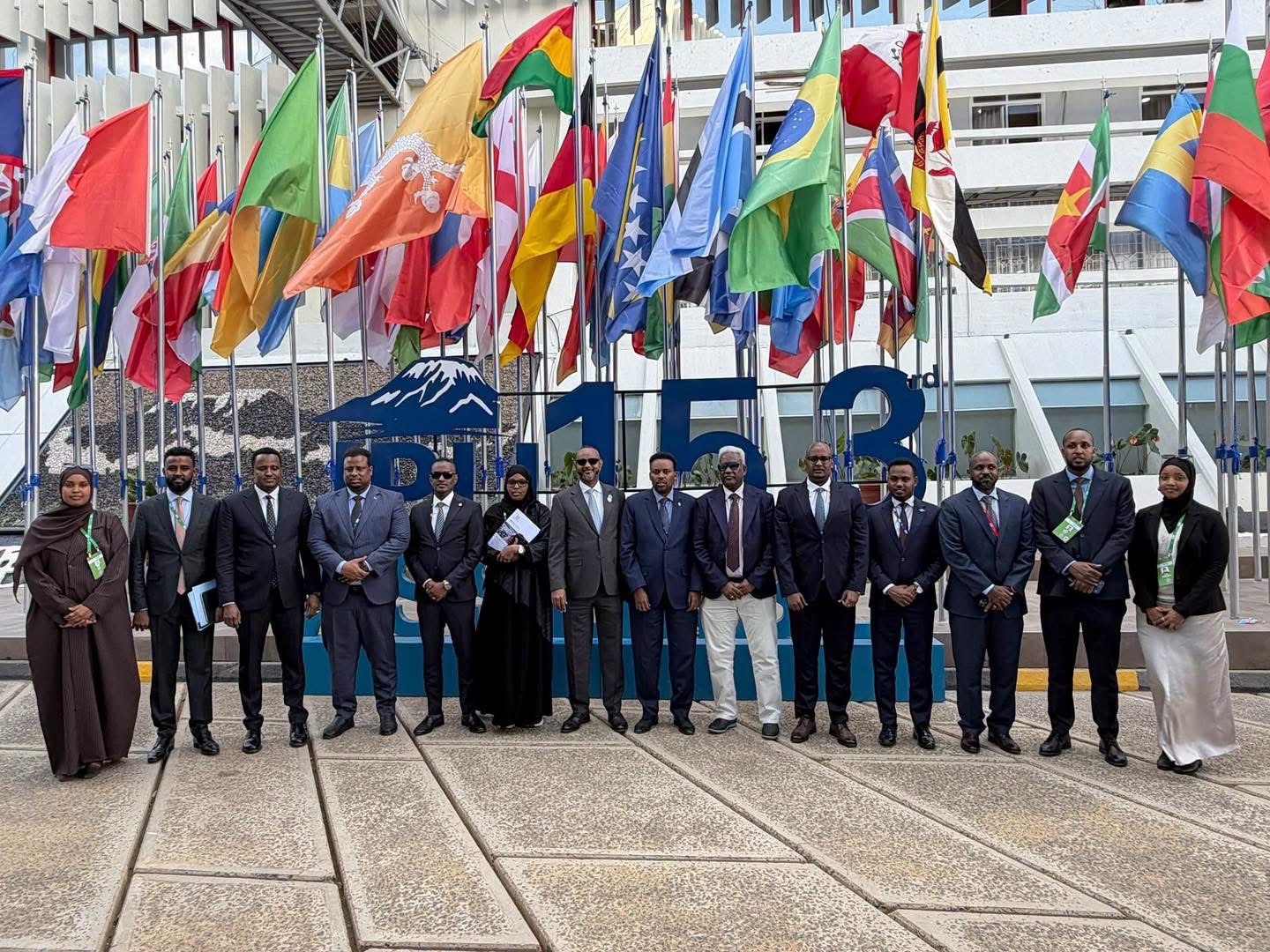
Arusha, Tanzania — October 6, 2026: Somalia has used a major international parliamentary gathering in Tanzania to present its political transition as a broader effort to strengthen democratic institutions, direct elections and parliamentary accountability.
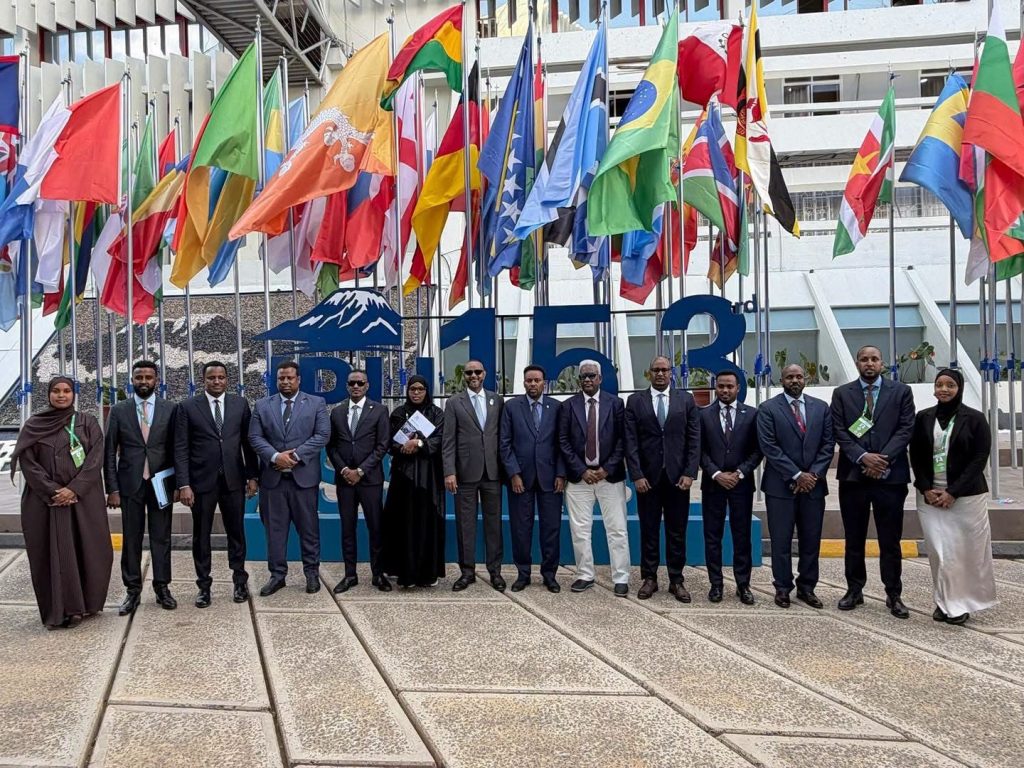
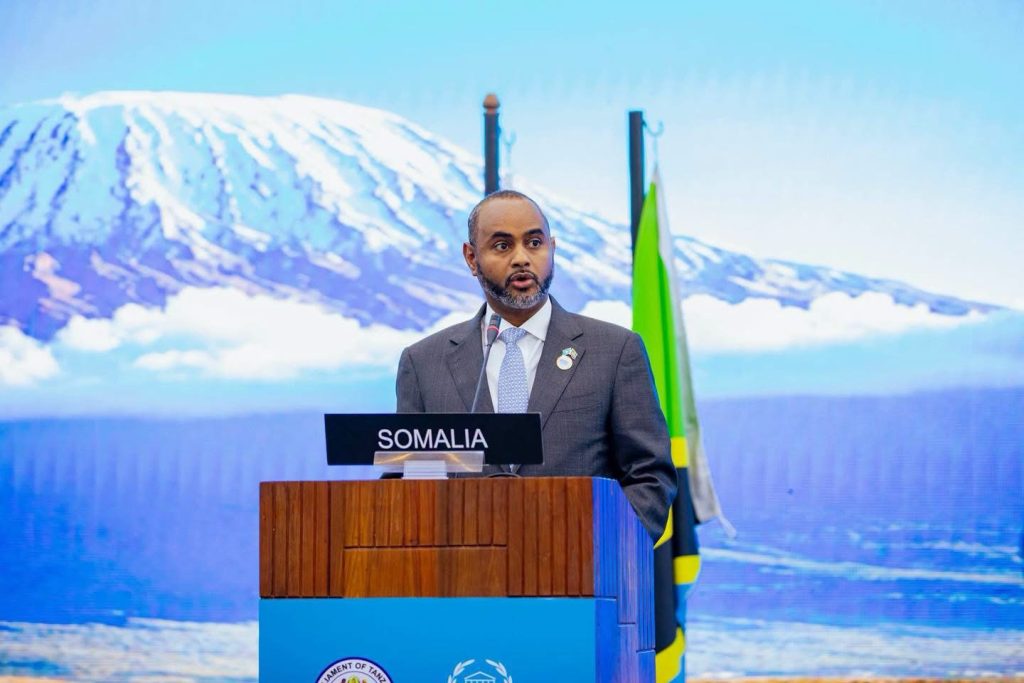
Abdulqadir Mohamed Nur Jama, Speaker of Somalia’s Federal Parliament’s House of the People, addressed the 153rd Assembly of the Inter-Parliamentary Union (IPU) in Arusha, where parliamentarians from around the world are meeting to discuss governance, parliamentary cooperation and greater public participation.
In his address, Nur thanked Tanzania for hosting the gathering and highlighted what he described as Somalia’s ambition to build a parliament that is independent, transparent, inclusive and closer to citizens.
But the significance of the speech extends beyond parliamentary diplomacy. It comes as Somalia continues to navigate the difficult transition from indirect political representation towards a system in which citizens have a more direct role in choosing their representatives.
Somalia’s Democratic Transition Under the Spotlight
The Somali government has increasingly presented direct elections as a central component of its political reform agenda.
According to the Speaker, direct local elections have already taken place in Mogadishu and in the federal member states of South West, Hirshabelle and Galmudug, with electoral processes continuing elsewhere.
The development is politically significant for a country where national political representation has historically depended heavily on indirect selection mechanisms involving clan-based structures and political elites.
Moving towards direct elections could potentially broaden political participation and strengthen the legitimacy of elected institutions.
Yet elections alone do not necessarily produce democratic accountability.
The deeper question is whether Somalia can build institutions capable of converting electoral participation into effective representation, transparent decision-making and meaningful oversight of government.
From Elections to Accountability
That distinction is important.
The Speaker’s emphasis on parliamentary independence, institutional strengthening, political dialogue and public participation points to a broader challenge facing Somalia: building institutions that can function effectively beyond individual political cycles.
A parliament that is elected directly but lacks sufficient independence, resources or oversight powers may struggle to provide effective checks on the executive.
For Somalia, parliamentary reform therefore involves more than changing how representatives are selected. It also raises questions about the relationship between the federal government, federal member states, political parties and citizens.
The credibility of the country’s democratic transition will ultimately depend on whether citizens believe that their votes translate into political influence and whether elected officials can be held accountable.
The Federal Question
Somalia’s political system adds another layer of complexity.
The country operates a federal structure in which political authority is divided between the federal government and federal member states. The development of electoral institutions across these different levels therefore carries implications for the broader balance of power within the federation.
Direct elections can strengthen political participation, but they can also generate disputes over electoral rules, constitutional authority, representation and the distribution of political power.
That makes political dialogue particularly important.
Somalia’s democratic transition cannot be separated from the country’s continuing debate over how federal institutions should interact and how political competition should be managed.
A Message to the International Community
The Arusha speech also serves a diplomatic purpose.
By presenting Somalia as a country investing in parliamentary institutions and democratic participation, its leadership is seeking to position the country within a wider international conversation about governance and institutional development.
The IPU provides an important platform for that message because parliamentary diplomacy allows countries to discuss democratic institutions outside the narrower framework of executive-to-executive relations.
For Somalia, demonstrating institutional progress internationally can also reinforce its argument that the country is moving towards a more stable and accountable political system.
But international recognition of reform will ultimately depend on what happens at home.
The Test Is Implementation
Somalia’s political history shows that constitutional commitments and political reality do not always move at the same pace.
The government’s stated commitment to direct elections, parliamentary independence and accountability will therefore face its most important test in implementation.
Are elections competitive and credible?
Can citizens participate regardless of political or social status?
Can parliament scrutinise the executive effectively?
Can political disagreements be resolved through institutions rather than confrontation?
And can Somalia establish electoral rules that are accepted by competing political actors?
These questions matter as much as the speeches delivered at international conferences.
The Arusha summit gives Somalia an opportunity to articulate its democratic ambitions to the world. The harder task is turning those ambitions into institutions that citizens can trust.
For a country emerging from decades of conflict and political instability, that transition could be one of the most consequential stages of its state-building project.
The central question for Somalia is no longer simply whether it can hold elections, but whether elections can become the foundation for a political system in which citizens genuinely shape government and elected institutions can hold power to account.