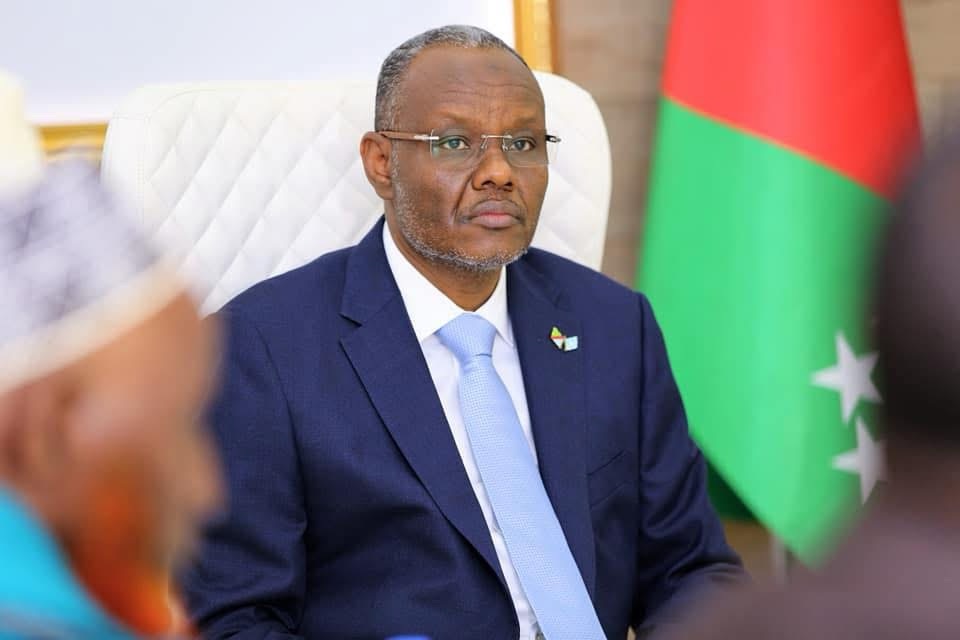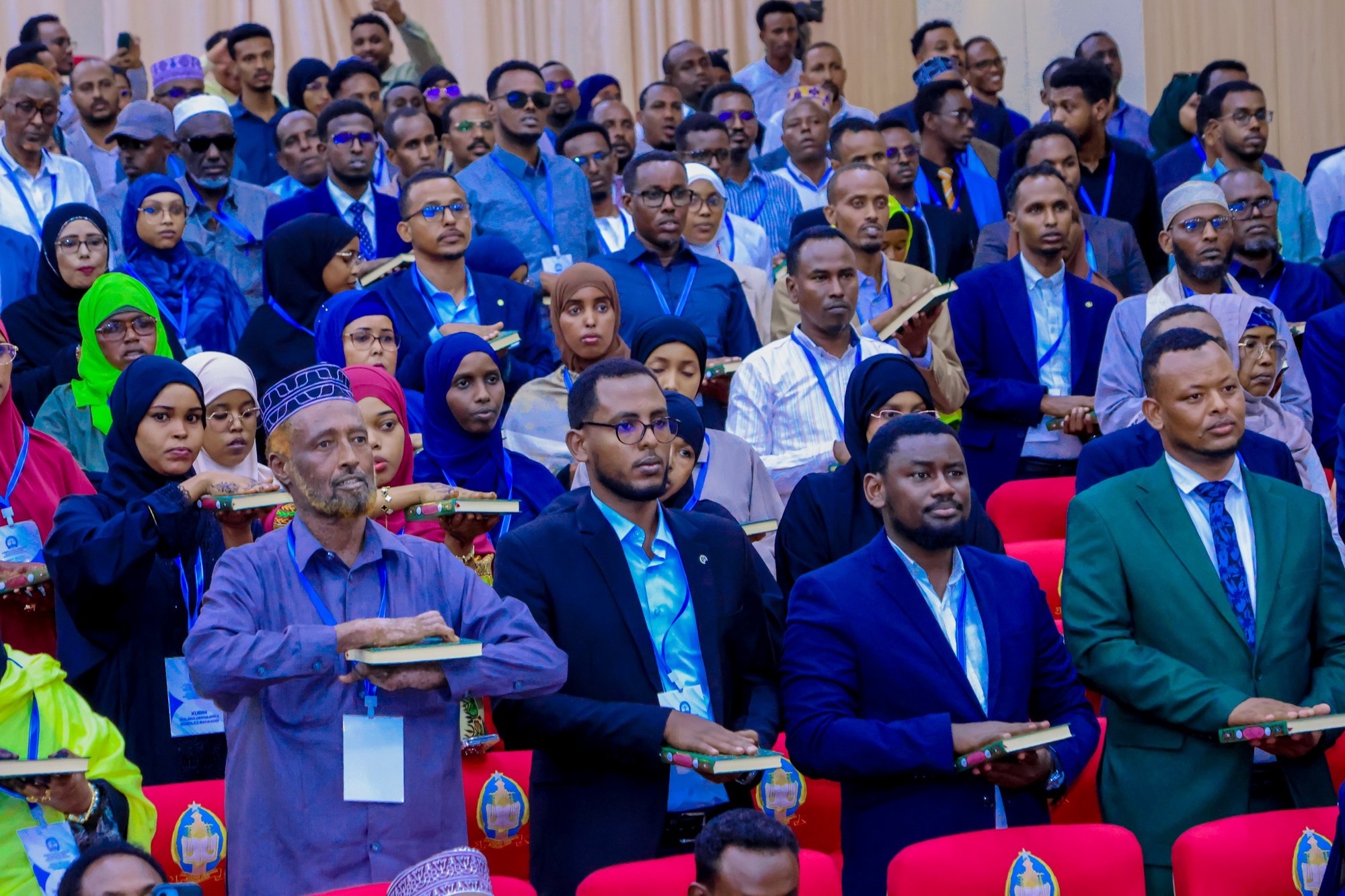
Balanballe, Galgaduud — October 6, 2026: A long-running local conflict in central Somalia has entered a new phase after elders representing communities from Balanballe and Guriceel concluded a reconciliation agreement, with the federal government moving to publicly support the process through new peace and education initiatives.
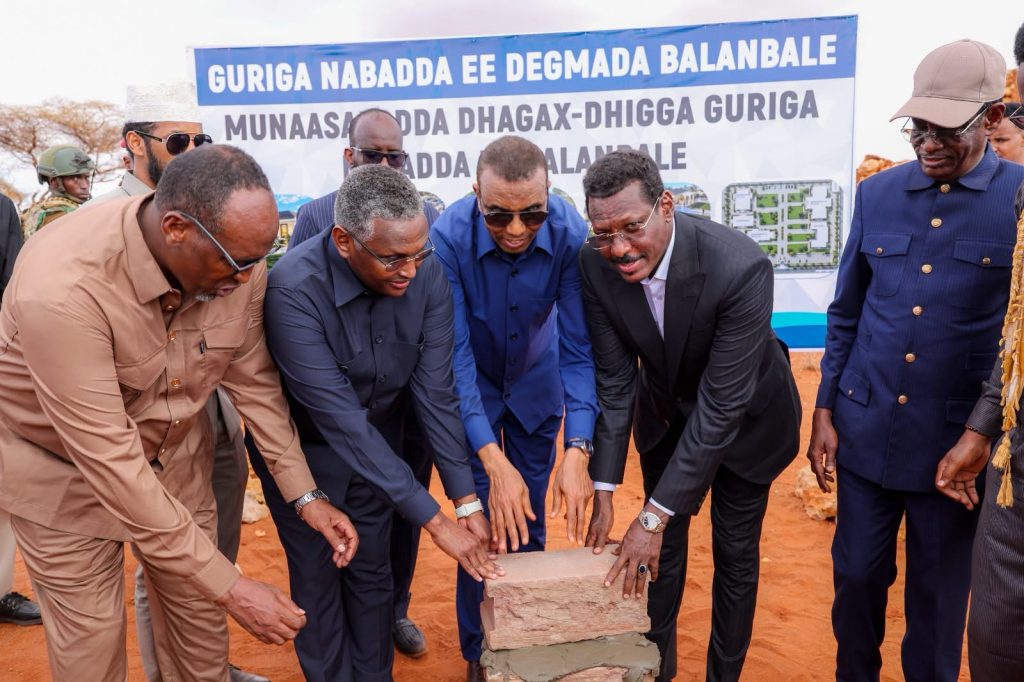
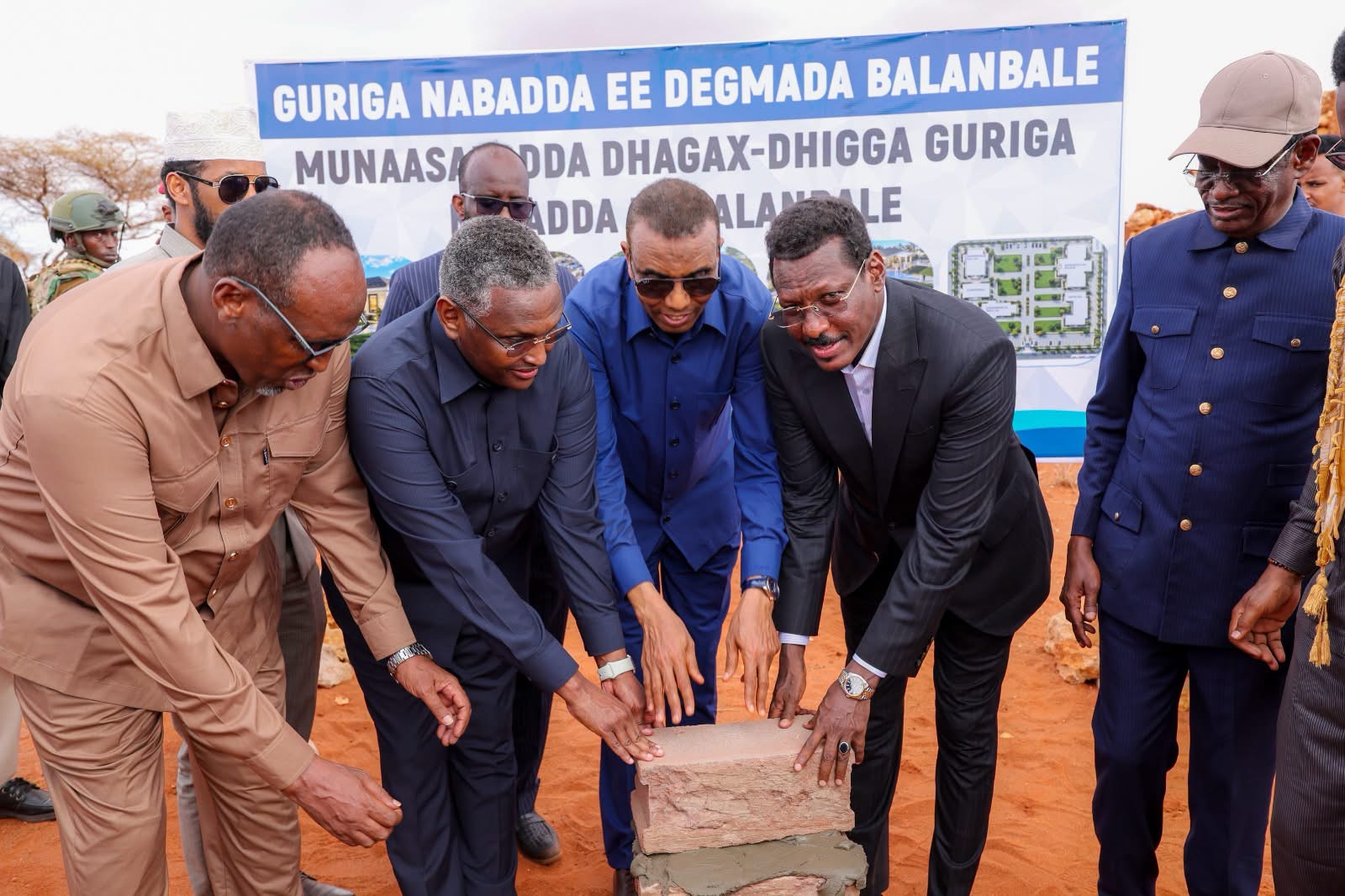
Prime Minister Hamza Abdi Barre travelled to Balanballe in Galgaduud region, where he laid the foundation stone for a new “Peace House” and an orphanage school following a reconciliation gathering between the two communities. The visit was accompanied by senior security officials, including Interior Security Minister Abdullahi Sheikh Ismail Fartaag and National Intelligence and Security Agency Director Mahad Mohamed Salad, as well as Galmudug leader Ahmed Abdi Karie Qoorqoor.
According to the government account, the Peace House is intended to serve as a permanent centre and symbol for peace and social cohesion, while the school is planned for children who lost their parents during the conflict and is expected to accommodate up to 600 students.
The developments point to a broader question for Somalia: can locally negotiated peace agreements become the foundation for stronger institutions and long-term development?
From Clan Reconciliation to Institutional Peace
Somalia’s traditional elders have long played a central role in resolving disputes between communities.
In Balanballe, the reported agreement was witnessed by 52 elders representing the two sides, with Ugaas Hassan and Ugaas Mohamed signing the final reconciliation agreement.
That process illustrates an important feature of Somali state-building.
Formal government institutions are not always the first mechanism through which communities resolve conflict. Traditional authorities, religious leaders and local communities frequently remain central to mediation and reconciliation.
The government’s involvement therefore represents more than a political visit. It is an attempt to connect traditional conflict-resolution mechanisms with state institutions and public services.
The challenge is making that connection sustainable.
The Children Left Behind by Conflict
Perhaps the most significant element of the initiative is not the Peace House itself, but the planned school for children who lost their parents during the conflict.
Conflict does not end when weapons fall silent.
Its consequences can continue through displacement, loss of income, disrupted education and the psychological and social impact on children.
A school designed specifically for children affected by conflict therefore links reconciliation to human development.
If properly funded and managed, such an institution could turn a peace agreement into something tangible for families who experienced the consequences of violence.
But its success will depend on what happens after the foundation stone is laid: financing, teachers, curriculum, safeguarding and long-term access to education will matter more than the ceremony itself.
Can Peace Become Development?
The Balanballe agreement also raises a wider policy question for Somalia.
Local peace agreements are often measured by whether fighting stops. A more ambitious measure is whether peace produces a sustained improvement in people’s lives.
That means connecting reconciliation to roads, schools, healthcare, livelihoods, local government and security.
Without those links, peace agreements can remain vulnerable to the same economic and political pressures that contributed to conflict in the first place.
The presence of federal and Galmudug authorities at the reconciliation event suggests an effort to give the agreement political and institutional backing. But maintaining peace ultimately requires continued engagement from the communities themselves.
The Role of the State
For Somalia’s federal government, the Balanballe process carries implications beyond Galgaduud.
The country continues to face the challenge of extending effective state institutions beyond major urban centres while working with existing local systems of authority.
A successful model would not necessarily replace traditional mechanisms with government institutions. Instead, it could create a relationship in which elders help resolve community disputes while government institutions provide security, justice and public services.
That balance could be particularly important in areas where trust in formal institutions remains limited.
What Comes After the Agreement?
The signing of a peace agreement is an important political moment. It is not, however, the end of reconciliation.
The next stage is implementation.
Can the two communities maintain the agreement when disputes over land, resources or local political representation arise?
Can young people who have grown up around conflict be given alternatives through education and employment?
Can government institutions provide reliable security without creating new grievances?
And can the federal and Galmudug governments continue supporting the agreement after the political spotlight moves elsewhere?
These questions will determine whether Balanballe becomes another temporary settlement or a longer-term example of locally driven peacebuilding.
For Somalia, the significance of the Balanballe agreement therefore lies not only in ending a particular conflict, but in whether reconciliation can be converted into institutions, education and economic opportunity.
The central policy challenge is clear: after communities make peace, can the Somali state help turn that peace into a durable social contract?