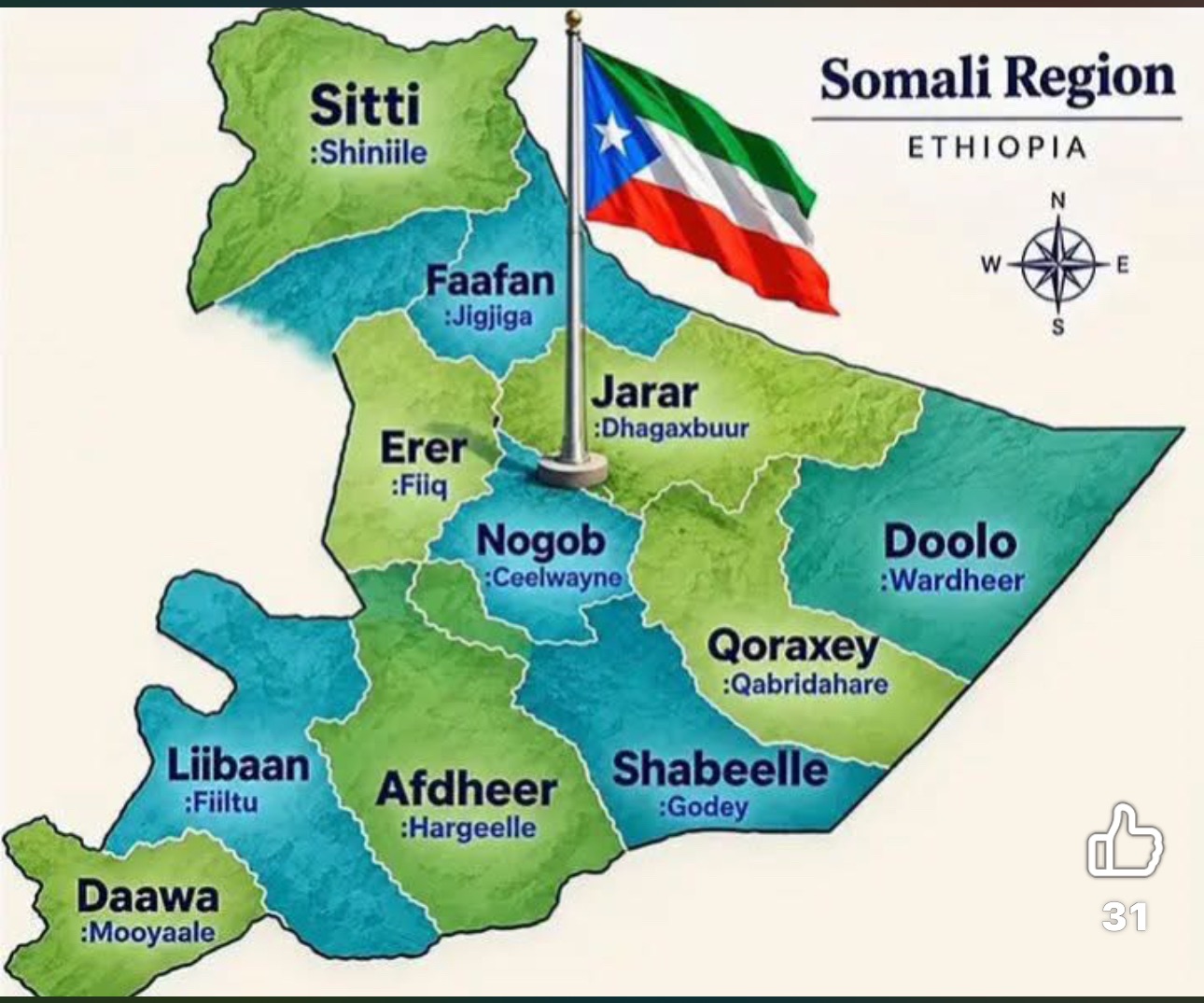
The conflict in Moyale is not simply an ethnic disagreement between Somalis and Oromos. For many Somalis, it represents a deeper struggle over ancestral territory, political identity and the right of Somali communities to determine their future.
The renewed violence in Moyale, on the Ethiopia–Kenya border, has reopened longstanding questions about land ownership, ethnic federalism and the treatment of Somali communities within Ethiopia.
For Somalis, the events unfolding in Moyale cannot be understood in isolation. They are viewed against a wider historical experience of territorial disputes, political marginalisation and recurring insecurity affecting Somali-inhabited areas of Ethiopia.
Moyale is a particularly sensitive location. The town sits within a historically interconnected Somali and Oromo borderland, with the Garre Somali and Borana Oromo communities maintaining longstanding relationships involving trade, grazing, water resources and settlement.
However, the competing political and territorial claims have increasingly turned these relationships into sources of confrontation.
The Somali position is that their communities have historical roots in these territories and should not be displaced or deprived of administrative authority over their ancestral settlements through political manoeuvring.
The question is no longer simply who controls an administrative office. It is who has the right to determine the political future of these communities.
The question of ancestral Somali land
For many Somalis, the conflict reflects concerns about what they regard as an expansionist political agenda in territories they consider historically Somali.
The Somali Regional State has experienced recurring disputes with neighbouring Oromia over administrative boundaries, local government structures and control of disputed territories.
The introduction of ethnic federalism in Ethiopia was intended to recognise the country’s diverse nationalities and provide communities with greater political autonomy. However, the system has also created competition over territory, administrative authority and political representation.
The 2004 referendum was intended to resolve some of the disputes between the Somali and Oromia regions, but disagreements have persisted.
More recently, administrative restructuring in the Somali Regional State and the establishment of Oromia’s East Borana Zone have intensified competing territorial claims.
From the Somali perspective, the concern is that administrative expansion can gradually become territorial expansion, weakening Somali political authority over communities and settlements they regard as their own.
These concerns cannot be dismissed simply as ethnic nationalism. They require transparent examination of historical settlement, administrative boundaries, local consent and the rights of affected populations.
The role of Abiy Ahmed’s government
The timing of the Moyale violence raises important political questions about Prime Minister Abiy Ahmed’s government.
Ethiopia is experiencing serious internal political challenges, including renewed tensions with Tigrayan forces, continuing insecurity in Oromia and disagreements between different political and ethnic movements.
The political landscape has become increasingly complicated, with previously competing opposition groups finding common ground against the federal administration.
Against this background, some Somali commentators and political figures suspect that the government may benefit from ethnic confrontation as a means of redirecting political attention and strengthening nationalist sentiment.
There are also concerns that the federal government has failed to act impartially in managing disputes between Somali and Oromo political administrations.
These allegations require independent investigation. There is no independently established evidence that Abiy Ahmed personally orchestrated the Moyale violence.
Nevertheless, his administration must answer serious questions about its responsibility for protecting civilians and ensuring that federal institutions do not become instruments of regional political competition.
A federal government cannot claim to represent all Ethiopians while allowing communities to feel that their security and territorial rights depend on their ethnic identity.
Concerns over the Ethiopian federal army
One particularly sensitive issue concerns the role of Ethiopian federal security forces.
Somali residents and commentators have raised concerns about the conduct and impartiality of federal security personnel during the confrontation.
Some allegations suggest that members of the federal military, including personnel identified as Oromo, participated in operations against Somali communities.
These allegations deserve serious investigation. However, ethnic identity alone does not establish that soldiers participated in an attack, and available independent reporting indicates that federal forces intervened to stop some of the initial clashes.
The Ethiopian National Defence Force is a national institution, not an Oromo army. Its constitutional responsibility is to protect all Ethiopian citizens without ethnic discrimination.
If individual soldiers or commanders participated in attacks against civilians, they must be held accountable.
Somali communities have every right to demand impartial security institutions, independent investigations and protection against collective punishment.
Somali anger is spreading beyond Ethiopia
The violence in Moyale has also had consequences beyond Ethiopia’s borders.
Reports of Somalis being targeted in Oromo-inhabited towns and growing insecurity among Somali residents have contributed to anger and fear within Somali communities.
In response, tensions have spilled into Somali-inhabited cities, including Borama, Hargeisa, Garowe and Bosaso, where some residents have demanded that undocumented Ethiopian migrants leave.
In Borama, reports emerged of Oromo residents and migrants being attacked and their homes burned following the Moyale violence. Somaliland authorities condemned the attacks and called for the protection of foreign residents.
In Garowe, Puntland authorities had previously ordered undocumented Ethiopian migrants to leave the city in June 2024, although that directive preceded the latest Moyale conflict.
These developments illustrate how violence in one part of the Horn of Africa can rapidly generate hostility towards entire communities elsewhere.
However, there is an important distinction between enforcing immigration laws and targeting people because of their ethnicity.
Oromo civilians living peacefully in Somali cities are not responsible for the actions of armed groups, regional administrations or Ethiopian political leaders.
Collective punishment cannot be justified by the suffering of another community.
Somalis should defend their territorial and political rights through lawful political action, community organisation and peaceful mobilisation, while protecting innocent people regardless of their background.
Kenyan Somali leaders challenge the Abiy administration
The Moyale conflict has also attracted criticism from Somali political leaders in Kenya.
Among the voices raising concerns are Kenyan Somali leaders who have questioned the Ethiopian government’s handling of the dispute and warned against what they describe as Oromo expansionism into Somali-inhabited territories.
Farah Maalim and Ali Roba have been among the Kenyan Somali political figures whose comments have drawn attention to the territorial dimension of the crisis.
Their interventions reflect a wider concern among Kenyan Somalis that instability in Ethiopia’s Somali-inhabited territories could have consequences for Somali communities across the region.
For Kenya, the matter is also directly relevant to national security. Moyale is a major commercial crossing connecting Nairobi and Addis Ababa. Violence threatens cross-border trade, displaces families and places additional pressure on communities in Marsabit County.
The arrival of tens of thousands of displaced people in Kenya demonstrates that the consequences of the conflict are not confined to Ethiopia.
Kenyan Somali leaders are therefore justified in demanding that both governments prioritise civilian protection, investigate allegations of abuse and pursue a lasting political settlement.
The real victims are ordinary Somalis and Oromos
It is important to recognise that the conflict is not a struggle between every Somali and every Oromo.
Both communities have legitimate concerns about security, land, political representation and access to resources.
The Borana have their own historical connections to the region, just as Somali communities have longstanding settlement and territorial claims.
Neither community should have its historical presence erased.
However, historical grievances must not become an excuse for armed expansion, forced displacement or attacks against civilians.
The people of Moyale have lived alongside one another for generations. They share markets, roads, water resources and economic interests. Their future should not be determined by politicians seeking to strengthen their regional influence.
The Ethiopian government must establish an independent process to investigate the violence, clarify disputed administrative boundaries and guarantee that local communities have a meaningful voice in determining their governance.
Somalis must defend their rights without creating another conflict
The Moyale crisis presents an important moment for Somali political leadership across the Horn of Africa.
Somali leaders in Ethiopia, Kenya, Somaliland and Puntland should coordinate their efforts to advocate for the protection of Somali civilians, recognition of historical settlement patterns and a fair resolution of territorial disputes.
They should demand independent investigations into allegations of attacks against Somali communities and the conduct of security forces.
They should also reject attempts to turn the conflict into a wider ethnic confrontation.
The defence of Somali rights does not require hostility towards innocent Oromo civilians or migrants. Nor should the actions of individual politicians or armed groups be attributed to an entire ethnic population.
The objective must be political recognition, territorial security and peaceful coexistence.
Moyale must not become another forgotten Somali grievance
For Somalis, Moyale represents much more than a dispute over a regional flag or the opening of an administrative office.
It touches on deeper questions of ancestral land, political representation, historical identity and the protection of Somali communities living within Ethiopia.
The Somali position must be heard and addressed rather than dismissed as an expression of ethnic rivalry.
Abiy Ahmed’s government has a responsibility to demonstrate that it is an impartial federal administration, capable of protecting all communities and resolving territorial disagreements through legitimate institutions rather than force.
The international community, particularly the African Union, must also pay attention to the unresolved disputes affecting Somali-inhabited territories.
There can be no lasting peace while communities believe their ancestral lands, political representation and security are under threat.
Moyale’s future must be determined through the rights, history and freely expressed wishes of the communities who live there, not through the military or political ambitions of competing administrations.
Somalis are entitled to defend their ancestral rights, demand accountability and insist on equal treatment.
But the ultimate victory must be peace, justice and the protection of civilians, not another generation trapped in ethnic conflict.

