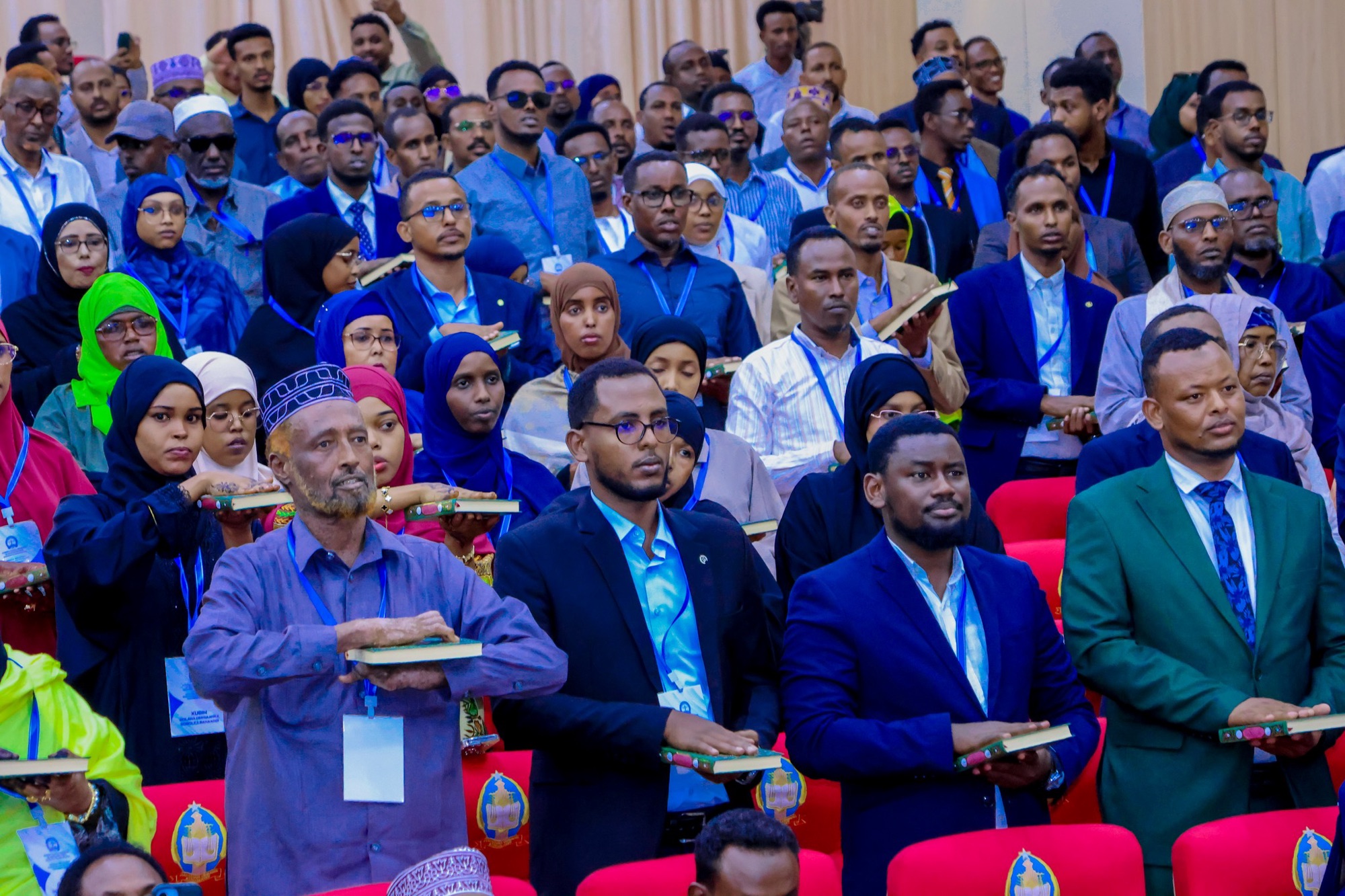
A landmark ruling challenging the mandates of SA landmark ruling has intensified a confrontation between Somalia’s presidency and judiciary, declaring that constitutional amendments extending the terms of federal leaders do not apply to the current administration.
By Mulki Hussein | The Somali
5 November 2026 | Mogadishu, Somalia
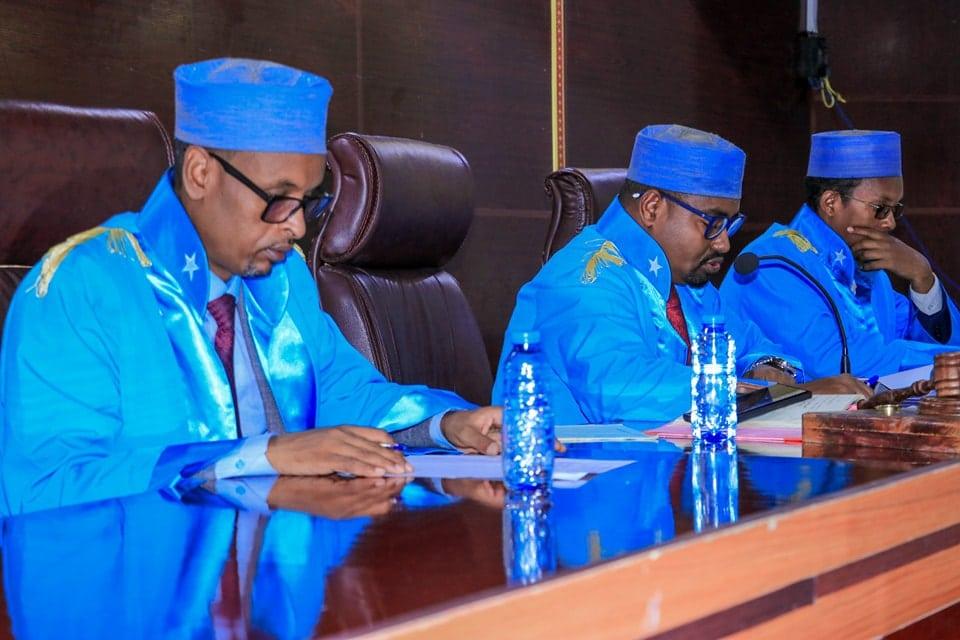
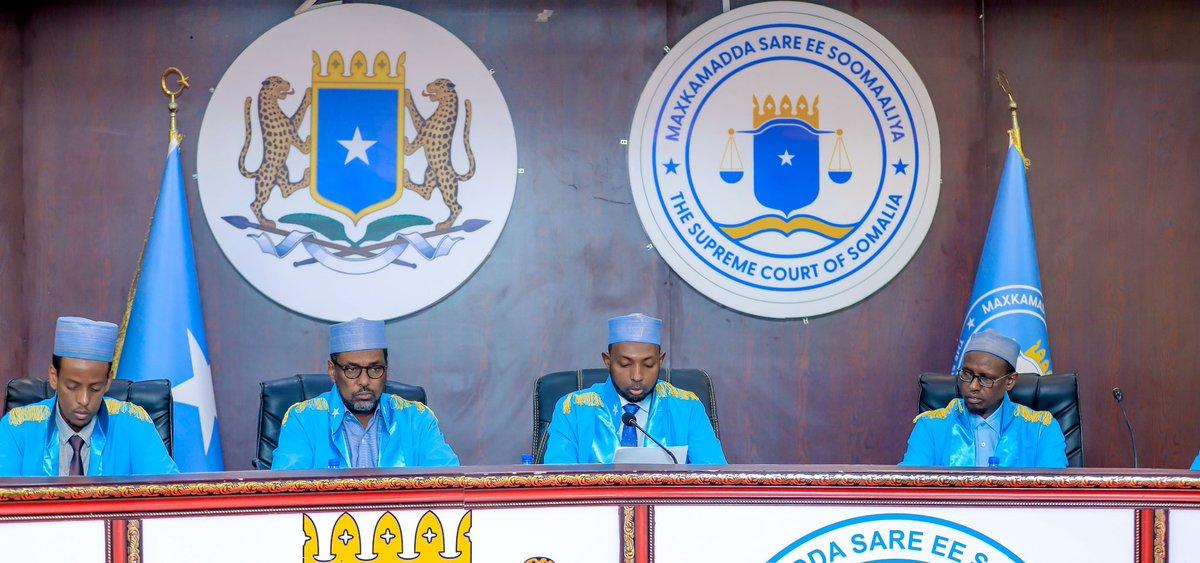
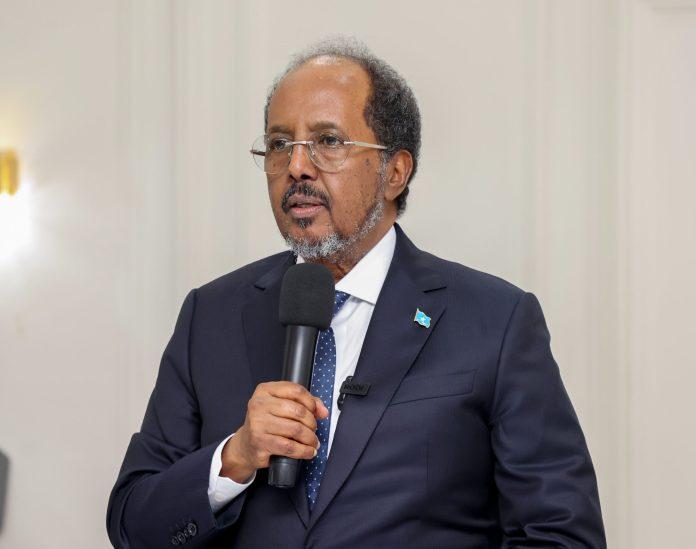
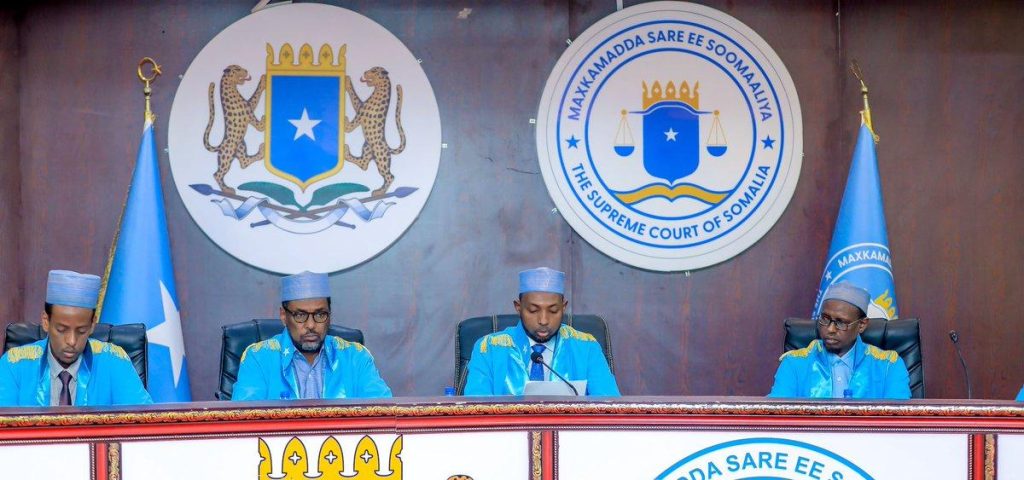
Somalia has entered a major constitutional confrontation after the country’s Supreme Court ruled that the extension of President Hassan Sheikh Mohamud’s mandate was unlawful, declaring that the constitutional terms of the current president and federal parliament had expired.
The ruling, delivered on Thursday, 5 November, challenges the legal basis for the federal government’s continued mandate and marks a significant escalation in the country’s political dispute over constitutional amendments and electoral arrangements.
The court ordered political stakeholders to reach an agreement on an electoral framework within 30 days and directed that elections be held within 90 days.
The decision also comes amid a growing confrontation between the presidency and judiciary following President Mohamud’s removal of Supreme Court Chief Justice Baashe Yusuf Ahmed a day earlier.
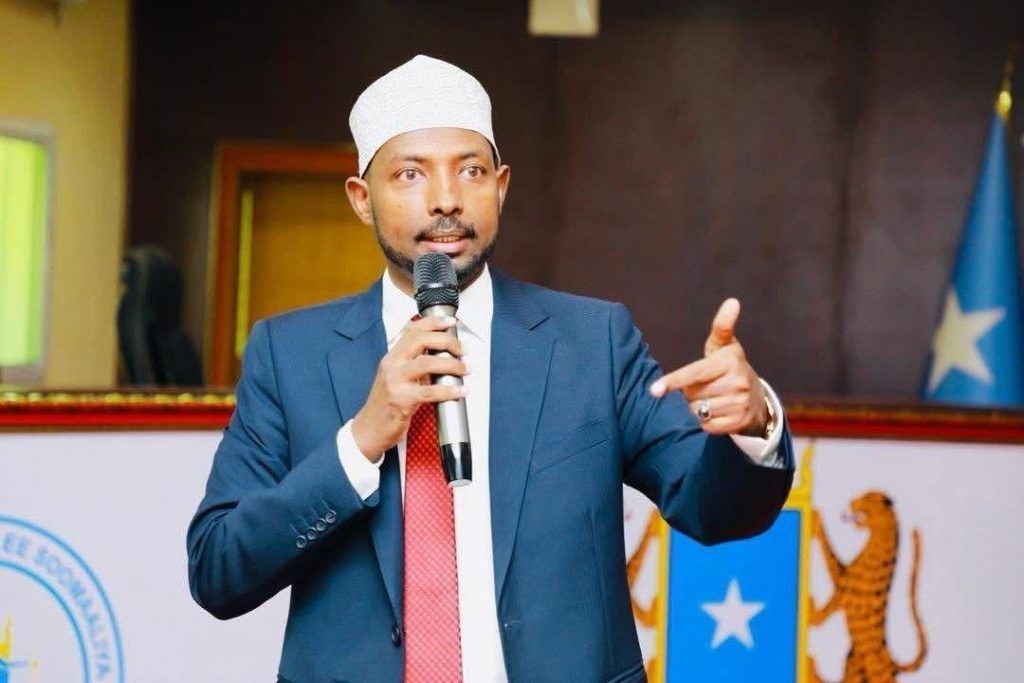
President removes Supreme Court Chief Justice
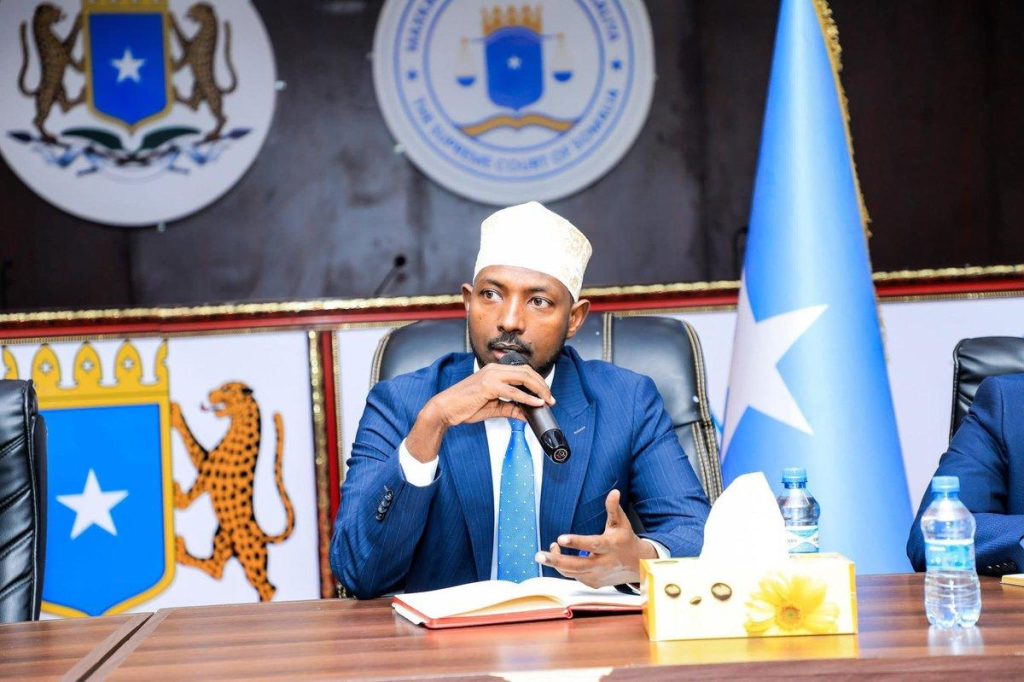
The constitutional ruling follows a controversial decision by President Hassan Sheikh Mohamud to remove Supreme Court Chief Justice Baashe Yusuf Ahmed.
On Wednesday, 4 November, the presidency announced that Mohamud had dismissed Baashe and reinstated former Chief Justice Ibrahim Idle Suleiman.
According to the presidential announcement, the decision followed concerns raised by judges, judicial staff and legal professionals about the administration of justice and the need for a more transparent and effective judicial system.
The presidency did not publicly identify specific allegations against Baashe or provide details of any disciplinary proceedings.
The announcement immediately generated controversy because it came while the Supreme Court was considering the constitutional petition concerning the mandates of federal institutions.
On Thursday, the Supreme Court declared the chief justice’s dismissal null and void.
The court argued that the president lacked the constitutional authority to remove the chief justice unilaterally and said the required constitutional procedures had not been followed.
It also accused the president of attempting to interfere with an ongoing constitutional case.
The presidency’s announcement and the court’s subsequent rejection have created a direct institutional confrontation between the executive and judicial branches.
Elections ordered within 90 days
The Supreme Court’s ruling established a short timetable for resolving the country’s political and electoral dispute.
It directed all parties involved in the electoral process to reach agreement on a workable electoral framework within 30 days.
The court further ordered that elections be held within 90 days.
The decision places pressure on the federal government, opposition representatives and other political stakeholders to reach an agreement over the country’s electoral arrangements.
Somalia has been working towards a more direct electoral system, moving away from the indirect clan-based model that has shaped previous parliamentary elections.
However, disagreements over constitutional changes, electoral procedures and political representation have complicated the transition.
The court’s decision now places the electoral question at the centre of the country’s immediate political agenda.
Supreme Court rejects application of extended terms to current leaders
The dispute centres on constitutional amendments approved by Somalia’s Federal Parliament in March 2026, which extended presidential and parliamentary terms from four years to five.
The changes became a source of political disagreement, with opposition figures challenging both the process through which they were adopted and their application to officials already serving in office.
Former Somali President Sharif Sheikh Ahmed filed a petition on 11 October challenging the constitutional amendments and their legal consequences.
In its judgment, the Supreme Court considered two separate questions: whether the constitutional amendment process was legally valid and whether the new terms could be applied retrospectively to the institutions already in office.
The court rejected the challenge to the amendment process, finding that Sharif Sheikh Ahmed lacked the legal standing to bring that particular claim.
However, it accepted the separate challenge concerning the application of the amendments to existing officeholders.
The court concluded that the constitutional changes did not explicitly state that the extended five-year terms should apply to institutions already serving in office.
It therefore ruled that the original four-year mandates remained applicable to the current leadership.
According to the judgment, the mandates of both houses of the Federal Parliament expired on 14 April 2026, while President Hassan Sheikh Mohamud’s term ended on 15 May 2026.
The court also determined that the federal government’s mandate expired alongside parliament’s, as its authority derives from the legislature.
It declared that actions taken by the affected institutions after their respective mandate expiration dates were unconstitutional and legally invalid.
Importantly, the court said the federal government could continue operating in a limited caretaker capacity, restricting its responsibilities to routine administrative affairs rather than major decisions beyond day-to-day government operations.
Opposition welcomes the court’s position
Somalia’s opposition figures have also responded to the ruling.
The Somali Salvation Forum expressed support for the Supreme Court’s position, with former President Sharif Sheikh Ahmed, former Prime Minister Hassan Ali Khaire and opposition lawmaker Abdirahman Abdishakur Warsame among those publicly backing the court’s position.
Opposition representatives have argued that the ruling reinforces the need for constitutional compliance and political agreement over the country’s electoral process.
The dispute reflects wider disagreements between the federal government and opposition groups over the constitutional amendments and the future direction of Somalia’s political system.
Implications for Somalia’s political future
The Supreme Court’s decision comes at a sensitive time for Somalia, where political stability and institutional development remain central to the country’s national priorities.
The dispute raises important questions about the relationship between constitutional authority, presidential power and judicial independence.
The judiciary’s role in resolving disputes involving the country’s highest political offices is particularly significant in a federal system where disagreements over constitutional interpretation can have consequences for the entire political structure.
The latest developments are also relevant to Somalia’s international partners, including the United Nations and African Union, which have supported the country’s state-building, governance and security efforts.
A prolonged political confrontation could create additional uncertainty around electoral arrangements and the functioning of federal institutions.
For international partners, the priority will be the peaceful resolution of the dispute through constitutional procedures and political dialogue.
What happens next?
The immediate challenge is whether Somalia’s political leadership and opposition groups can reach an agreement within the 30-day timeframe established by the Supreme Court.
The court’s 90-day election directive also raises practical questions about preparations, electoral administration and the political arrangements required to conduct the process.
The federal government has not yet publicly resolved the institutional dispute created by the court’s rejection of the chief justice’s dismissal.
The coming weeks will therefore be important in determining whether the parties can establish a negotiated electoral framework and prevent further escalation between the country’s institutions.
Somalia’s constitutional dispute is no longer limited to disagreements over the length of political mandates. It has developed into a wider confrontation over the authority of the presidency, the independence of the judiciary and the legal foundations of government.
The outcome could have lasting implications for Somalia’s political institutions and its efforts to establish a stable, credible and broadly accepted electoral system.