Behind every reported disappearance is a family living with uncertainty. From Nairobi to the northeastern counties, cases involving Somali individuals have raised difficult questions about personal safety, the protection of vulnerable communities and the responsibility of the government to ensure that everyone can live without fear.
There is a particular kind of suffering that comes with not knowing what has happened to someone you love.
A telephone call goes unanswered. A family member does not return home. Hospitals are contacted, police stations visited and friends questioned. Days pass, then weeks. Parents wait for news. Children ask questions. Brothers and sisters search for information, often without knowing where to turn.
For families whose relatives have disappeared in Kenya, this uncertainty has become an agonising experience.
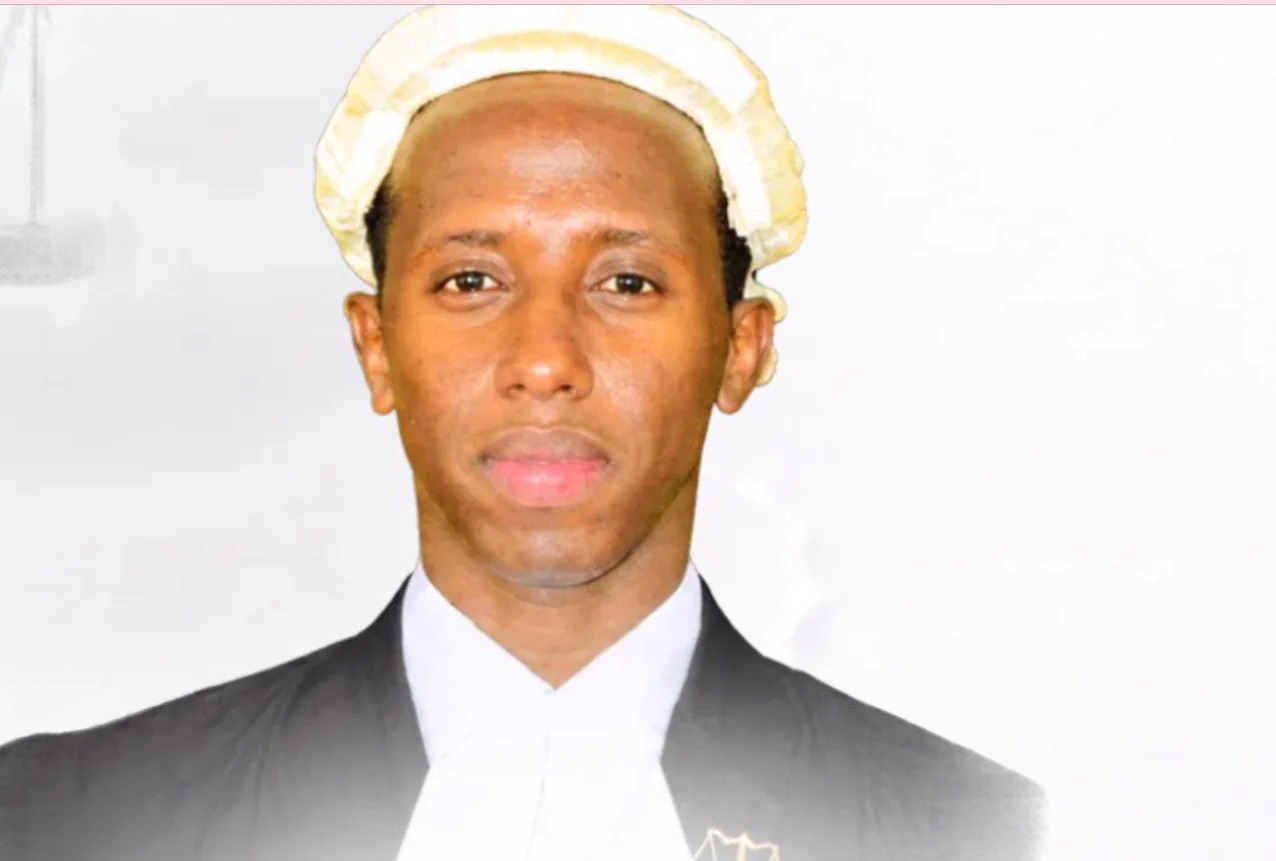
The reported disappearance of Nairobi lawyer Abshir Ahmedsadak Abdi on November 1, 2026, has brought renewed attention to the issue. His case has prompted concern among his relatives, members of the legal profession and human rights organisations, while raising broader questions about the safety of people living and working in Kenya.
But behind the legal proceedings, public statements and demonstrations is a family waiting for a loved one to return.
A family waiting for its son
According to Amnesty International Kenya, Abshir was taken by armed individuals along Muchai Road, off Ngong Road, in Nairobi, at approximately 4:43 a.m. on November 1.
The organisation said media reports and CCTV footage showed armed individuals pursuing him before taking him away.
The circumstances surrounding the incident remain under investigation. His family has appealed for information about his whereabouts and his safe return.
On November 6, members of the Law Society of Kenya took to the streets of Nairobi to express concern over his disappearance and call for action.
Speaking during the demonstrations, Abshir’s brother described the distress facing the family.
“I don’t want to call him missing. He is the abducted,” he said.
He described seeing evidence of an operation involving three vehicles, one allegedly blocking his brother’s path, another positioned beside him and a third behind him.
“Nobody just abducts somebody off the street with three vehicles, one blocking your way, one beside you, and one behind you,” he said.
The family wants one thing above all else: to know where Abshir is and whether he is safe.
His brother also questioned why attention had been directed towards allegations concerning Abshir rather than establishing his whereabouts.
“If at all they claim he is what he is and he led a double life, why not bring him in a court of law? Why not charge him like everybody else?” he asked.
It is a question rooted in a fundamental principle of justice. Every person, regardless of the allegations made against them, deserves the protection of the law.
If someone is suspected of an offence, the matter should be investigated through lawful procedures. If there is sufficient evidence, the person should be brought before a court. If there is no evidence, the individual should not be deprived of their freedom.
The family has sought intervention through the courts. The Law Society of Kenya has also joined efforts to establish his whereabouts. The Directorate of Criminal Investigations has said it constituted a team to investigate the circumstances surrounding the disappearance, while the police have denied involvement.
These developments make it particularly important that the investigation is thorough, transparent and capable of providing answers.
The immediate priority should be Abshir’s safety and the establishment of his whereabouts.
His brother described the emotional burden on their parents, who were still waiting for news of their son.
“At home, I have a mother and a father who don’t know the whereabouts of their son for a week. I don’t know what to tell them,” he said.
For those parents, this is not a debate about institutions or politics. It is about their child.
Bashir Mohamed: A family seeking answers after a tragic death
The concerns surrounding Abshir’s disappearance have also brought to mind the case of Bashir Mohamed Mohamud, a 36-year-old Somali-American businessman and construction engineer who disappeared in Nairobi in May 2021.
Bashir was reported missing on May 13 after visiting Miale Entertainment Lounge in Lavington.
His Range Rover was later found burnt in the Kibiku area of Ngong, in Kajiado County.
His family continued searching for him until his body was discovered at a morgue in Kirinyaga County, approximately 200 kilometres from Nairobi. Relatives subsequently identified him.
A post-mortem examination conducted by Chief Government Pathologist Johansen Oduor reportedly established strangulation as the cause of death. Reports of the examination also described injuries including burns and blunt-force trauma.
For his family, the discovery of his body brought an end to the uncertainty over his whereabouts, but it did not answer the questions surrounding his death.
Relatives questioned aspects of the investigation and sought a separate inquiry. They wanted to understand what had happened to Bashir, how he had died and whether those responsible would be identified.
The circumstances of his death deserve a thorough and credible investigation. His family, like any other family that loses a loved one under unexplained circumstances, deserves access to the truth and the opportunity to pursue justice.
The case also illustrates an important point: finding a missing person is not always the end of the search for answers. Where someone is found dead, families need to know that the circumstances have been properly investigated and that any available evidence has been examined.
A history that families have not forgotten
The concerns of Somali families in Kenya did not begin with the recent cases.
During President Uhuru Kenyatta’s administration, human rights organisations documented serious allegations concerning disappearances and deaths during counterterrorism operations.
A 2016 investigation by Human Rights Watch examined operations in Nairobi and northeastern Kenya between 2013 and 2015.
The organisation documented 34 people, including two women, who were reportedly taken into custody during security operations and whose whereabouts remained unknown at the time of its investigation.
Most of the individuals documented were young ethnic Somali men. Some were described as Islamic teachers, students and religious leaders.
Human Rights Watch interviewed more than 117 people, including relatives, witnesses, victims, security officials and politicians.
Its report described families searching police stations and detention facilities, contacting public officials and seeking assistance from human rights institutions in an effort to locate their relatives.
The organisation also documented at least 11 cases in which bodies of people previously reported to have been arrested by state agents were subsequently found.
These figures relate to the cases documented during the period covered by the investigation. They should not be mistaken for a complete record of all disappearances during the entire Kenyatta presidency.
Nevertheless, the experiences described in the report reveal the profound difficulties families faced when trying to establish the whereabouts of missing relatives.
For a parent, the most painful question is often the simplest: Is my child alive?
That question should never be left unanswered because a family lacks money, influence or access to powerful institutions.
Eastleigh and the importance of protecting communities
Eastleigh is one of Nairobi’s most important commercial centres. It is home to thousands of families, businesses, workers, students and visitors. Its contribution to the city’s economy is significant, and its residents form part of Kenya’s wider social and economic life.
It has also featured in reports concerning security operations, arrests and disappearances.
In April 2014, the government launched Operation Usalama Watch as part of its response to security threats. The operation involved a major deployment of security personnel and focused heavily on Eastleigh.
The government’s responsibility to address terrorism and criminal activity was legitimate. At the same time, investigations by Human Rights Watch and the Kenya National Commission on Human Rights documented allegations of unlawful arrests, detention, extortion, looting and mistreatment during the operation.
The lessons from that period remain relevant.
Security and human rights should not be treated as competing objectives. Residents want to live in safe neighbourhoods, businesses want to operate without fear and families want to know that law enforcement will protect them.
The government must ensure that security operations are professional, lawful and respectful of the rights of everyone affected.
People should be able to report crimes, cooperate with investigations and approach police officers without feeling that their identity or background makes them vulnerable.
Other families have also experienced uncertainty
Several other cases involving Somali individuals in Kenya have attracted public attention in recent years.
In November 2023, Adan Osman, a Somali refugee and madrassa teacher, was reported to have been abducted in Eastleigh. Citizen Digital reported that CCTV footage appeared to show armed men forcing him into a pickup vehicle. His family appealed for information and assistance. His eventual fate has not been established in the material reviewed for this article.
That same month, Osman Khalif, a former South C member of the Nairobi County Assembly, was reported to have been abducted outside Sarit Centre. Media reports said he was subsequently released after approximately 12 days.
In September 2023, Mombasa businessman Zakariya Kamala Sufi Abashiekh was reported missing. His family raised concerns about his disappearance. Somalia’s National Intelligence and Security Agency later announced that he had been arrested in Somalia. The circumstances surrounding the case raised questions about cross-border legal processes and the importance of protecting the rights of individuals.
There have also been cases with positive outcomes.
Wajir MCA Yussuf Hussein Ahmed disappeared in September 2024 after a taxi he was travelling in was reportedly intercepted along Enterprise Road in Nairobi. A body discovered at Lake Yahud was initially the subject of speculation, but DNA testing established that it was not him. Ahmed was reunited with his family in March 2025.
In March 2026, Eastleigh businessman Abdi Aidid Ali was reported to have been abducted by armed men travelling in two SUVs. His family sought legal intervention. He was later found safe, and the family withdrew its court case.
These cases have different circumstances and outcomes. They should not be treated as evidence that every disappearance has the same explanation. They do, however, demonstrate why families need reliable information, effective investigations and accessible support when someone goes missing.
The return of a missing person is a moment of relief for a family. But that relief should also encourage authorities to establish what happened and consider whether further protection is necessary.
The responsibility to protect every person
The Kenyan Constitution provides protections that apply to everyone.
Article 29 protects the right to freedom and security of the person, including protection against arbitrary deprivation of freedom, violence and torture.
Article 49 sets out the rights of arrested persons, including the right to be informed of the reason for arrest and to be brought before a court within the prescribed period.
These rights are essential to a functioning society. They protect individuals while allowing law enforcement agencies to carry out their duties.
The government has a responsibility to investigate crime, prevent violence, protect vulnerable people and ensure that those who break the law are held accountable through the justice system.
It also has a responsibility to respond when families report that someone has disappeared.
That response should not depend on whether the missing person is wealthy or poor, influential or unknown, Kenyan or a foreign national.
Every person deserves protection.
The government should strengthen the systems through which missing-person reports are received, recorded and investigated. Families should have a clear point of contact, timely information and access to appropriate legal and support services.
Where a person is reported to have been taken by armed individuals, investigators should act quickly to secure CCTV footage, identify witnesses, trace vehicles where possible and follow other available evidence.
Hospitals, police stations, detention facilities and relevant public institutions should have effective procedures for helping families establish whether a missing relative has been admitted, arrested or detained.
Independent oversight institutions should also be able to examine complaints and ensure that investigations are conducted fairly.
Above all, public communication matters. Families should not be left to depend entirely on rumours, social media reports or information passed between third parties.
A call for action, not fear
The Somali community is part of Kenya’s wider society. Its members include citizens, refugees, business owners, professionals, students, public servants and families who have made their homes in the country.
Like all communities, they want security, opportunity and the freedom to live ordinary lives.
They want their children to attend school, their businesses to operate, their professionals to work and their families to return home safely.
They also want confidence that when something goes wrong, the institutions established to protect them will respond.
The government should treat every reported disappearance with urgency and seriousness. It should support credible investigations, provide information to families, protect witnesses and ensure that any person found responsible for a crime is dealt with through the law.
Human rights organisations, community leaders, professional associations and the media also have a role to play by documenting cases accurately, supporting affected families and helping ensure that concerns receive appropriate attention.
The objective should not be to create fear or distrust between communities and institutions. It should be to strengthen public confidence through transparency, professionalism and effective protection.
For Abshir’s family, the immediate hope is that he will be found safe and reunited with those waiting for him.
For Bashir Mohamed’s family, the search for answers following his death remains a reminder of the importance of credible investigations.
For families whose relatives disappeared years ago, recognition and accountability still matter.
And for the thousands of people who simply want to live and work safely in Kenya, the message is straightforward: protection under the law must be real, accessible and equal.
A government is entrusted with the safety of its people. That responsibility is measured not only by its response to major security threats, but also by how it treats an ordinary family searching for a missing son, daughter, brother or sister.
No family should have to spend days visiting institutions simply to discover where a loved one is.
No person should feel that their background makes their safety less important.
The demand is not for accusations. It is for answers, proper investigations, stronger protection and a government that leaves no family feeling abandoned when it needs help most.