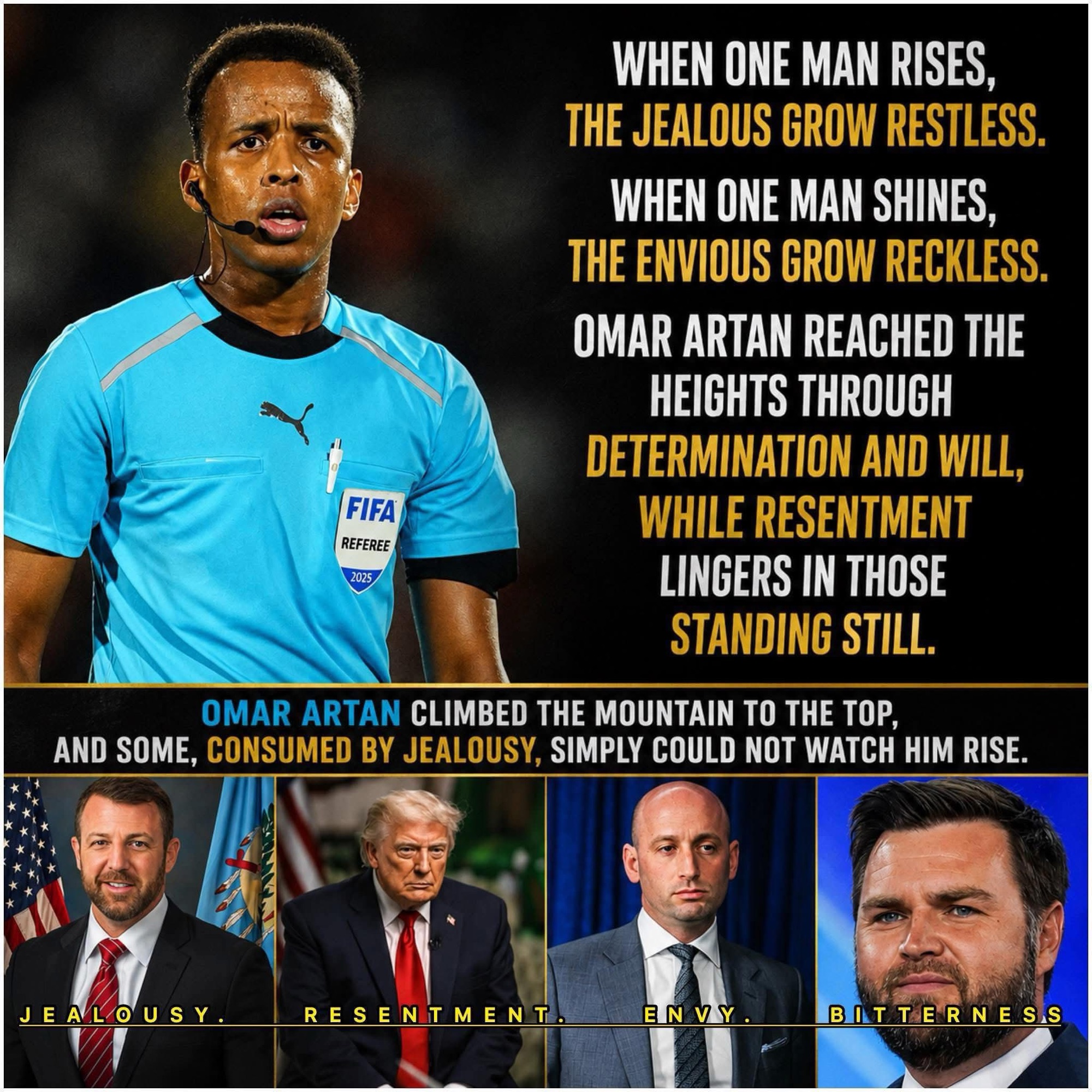
 The reported refusal of entry to Somali football referee Omar Artan by United States authorities has sparked concern among football fans, Somalis worldwide, and advocates of international sporting cooperation.
Omar Artan is not an ordinary individual. He is widely regarded as one of Africa’s most accomplished referees and has spent years working tirelessly to reach the highest levels of international football. His journey is one of determination, discipline, and resilience.
Coming from Somalia, a country that has faced decades of conflict and instability, Artan overcame significant obstacles to establish himself on the global stage. Through hard work and professional excellence, he earned the trust of football governing bodies and became a respected figure within the international game.
For many observers, the decision to deny entry to such a well-known sporting official raises troubling questions. Artan has travelled extensively across multiple countries throughout his career and has represented football at the highest levels. His professional credentials are well established and recognised internationally.
The controversy also raises broader concerns about the relationship between politics and sport. Football has long promoted itself as a force for unity, inclusion, and international cooperation. FIFA frequently speaks about bringing people together regardless of nationality, ethnicity, religion, or political background.
If respected officials can face barriers based on nationality, many will ask whether the principles that football claims to uphold are being applied consistently.
FIFA, in the eyes of many critics, should do more to protect players, referees, coaches, and officials from discrimination and unequal treatment. When international tournaments depend on the participation of people from every corner of the world, governing bodies have a responsibility to ensure that all accredited participants are treated fairly.
The issue becomes even more significant as the United States prepares to host major international football events, including matches during the FIFA World Cup. Global sporting competitions are built on the idea that individuals from different nations can come together in a spirit of mutual respect. Any perception that certain nationalities are being singled out risks undermining that vision.
Many countries around the world, including Canada, Turkey, and others, regularly welcome international sports officials and participants after conducting their own security and immigration assessments. This reality makes the situation surrounding Artan particularly difficult for many supporters to understand.
More broadly, the case serves as a reminder of ongoing debates about the role of powerful nations within international institutions. Critics argue that major powers often act according to domestic political priorities even when those decisions conflict with the expectations of international organisations or global public opinion.
Whether one agrees with that assessment or not, the reaction to Omar Artan’s case demonstrates how deeply people care about fairness, equal treatment, and the integrity of international sport.
Football is called the world’s game because it transcends borders. Referees, players, and supporters come from every nation and every background. If the sport is truly committed to unity and inclusion, those values must extend beyond slogans and marketing campaigns.
The Omar Artan controversy is about more than one referee. It is about whether international sport can remain a space where merit, professionalism, and shared humanity matter more than nationality.
As football continues to grow globally, FIFA and host nations alike must ensure that the principles of fairness and inclusivity remain at the heart of the beautiful game.