Senior Somali security officials have held talks with opposition leaders in Mogadishu, in a meeting that highlights growing concerns over the relationship between the country’s political tensions and national security.
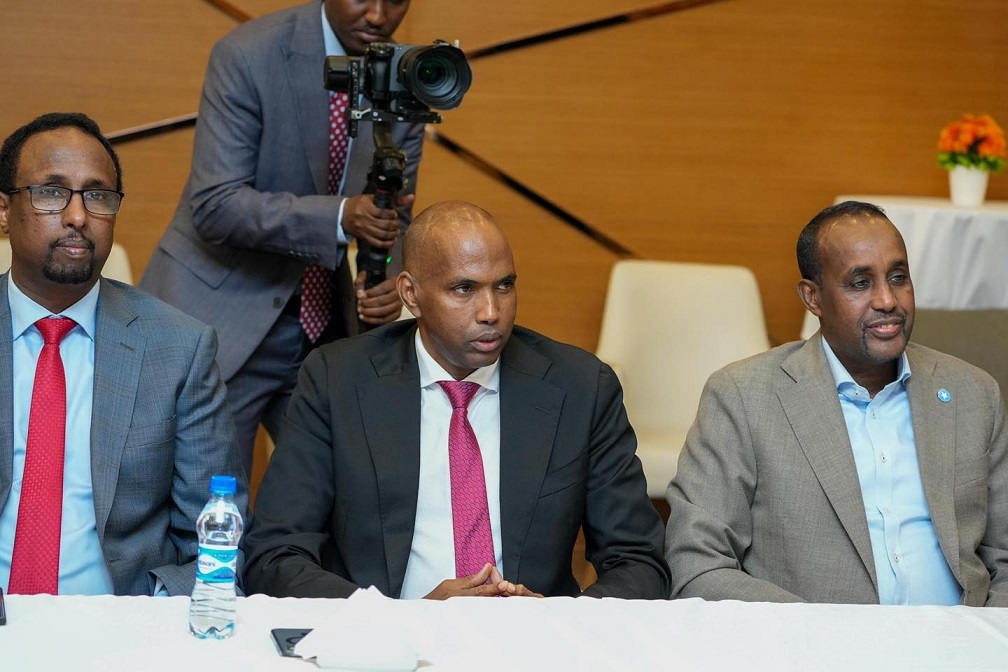
The meeting, held at the residence of former Prime Minister Mohamed Hussein Roble, brought together senior commanders and representatives of the opposition’s Madasha Samatabixinta, also referred to in recent reporting as the Somali Future Council.
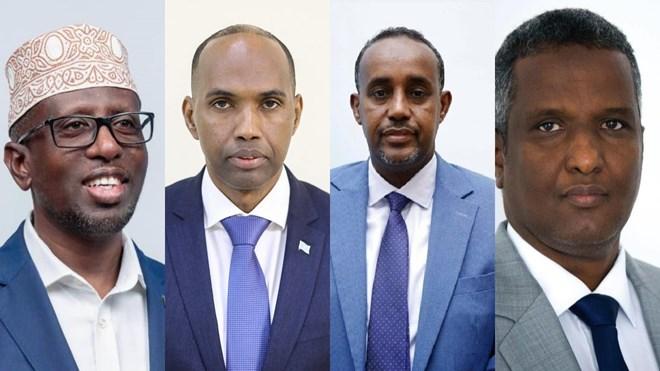
Among those attending were former President Sharif Sheikh Ahmed, former Prime Ministers Mohamed Hussein Roble and Hassan Ali Khaire, and opposition politician Abdirahman Abdishakur Warsame.
The government delegation included Somali National Army Commander General Ibrahim Mohamed Mohamud, Police Commissioner General Asad Osman Abdullahi, National Intelligence and Security Agency (NISA) Director Mahad Mohamed Salad, and Military Court Chairman Colonel Hassan Ali Nur (Shuute).
Four areas of understanding
Reports published following the meeting indicate that the two sides reached an understanding on four key issues.
These include avoiding the politicisation of national security, strengthening cooperation against armed groups such as Al-Shabaab and Islamic State, pursuing an electoral process based on political agreement, and rebuilding trust between the government and opposition.
The reported understanding is significant because the country’s political disagreements have increasingly raised concerns about institutional stability and the potential consequences of prolonged political confrontation.
However, agreement on these principles does not necessarily mean that the underlying political dispute has been resolved.
Elections remain the central disagreement
Somalia continues to face disagreements over its electoral system and the political arrangements governing the country’s next transition.
President Hassan Sheikh Mohamud has invited political stakeholders to participate in a national consultation meeting scheduled for November 14–18 in Mogadishu.
The opposition, however, has raised concerns about the direction of the proposed political process, insisting that meaningful dialogue must involve shared decision-making and an agreement acceptable to all sides.
The disagreement reflects a wider challenge facing Somalia: establishing an electoral framework that enjoys sufficient political legitimacy and avoids further divisions among federal institutions and political stakeholders.
Why the security dimension matters
The involvement of senior security officials in discussions with opposition politicians gives the meeting particular significance.
Somalia continues to face security threats from armed groups, making cooperation between national institutions and political stakeholders an important part of maintaining stability.
Political disagreements do not exist separately from the country’s security environment. Prolonged institutional disputes can undermine public confidence, weaken cooperation and create additional pressure on already challenged state institutions.
For this reason, the reported commitment to avoid politicising national security could represent an important starting point.
Dialogue is only the beginning
Despite the reported understanding on security and electoral principles, the most difficult questions remain unanswered.
Will the government and opposition agree on a common electoral framework? Will the upcoming consultation meeting produce meaningful negotiations? And can both sides translate their commitments into practical political agreements?
For now, the Mogadishu meeting represents a possible opening for further dialogue rather than a resolution of Somalia’s political crisis.
The real test will be whether the country’s political leaders can move beyond expressions of willingness to cooperate and reach an agreement on the electoral future of Somalia.
Somalia needs more than political meetings. It needs an electoral process built on trust, consensus and institutions that all sides are willing to respect.