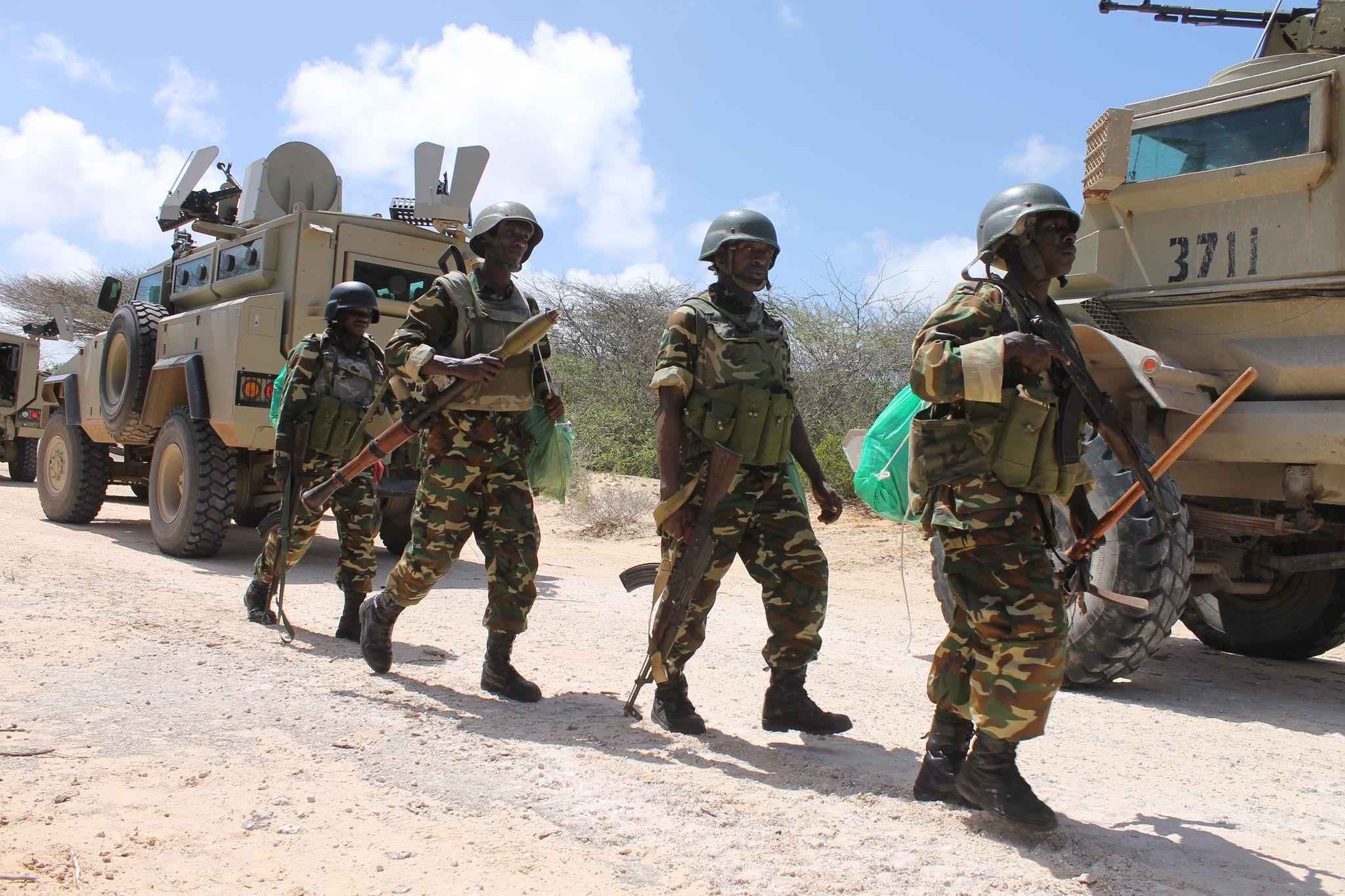
Washington’s decision offers temporary relief to an international security operation fighting Al-Shabaab, but funding uncertainty, Uganda’s planned troop withdrawal and Somalia’s political divisions continue to threaten the mission’s future.
By Mulki Hussein | THE SOMALI
A sudden shift in Washington’s position
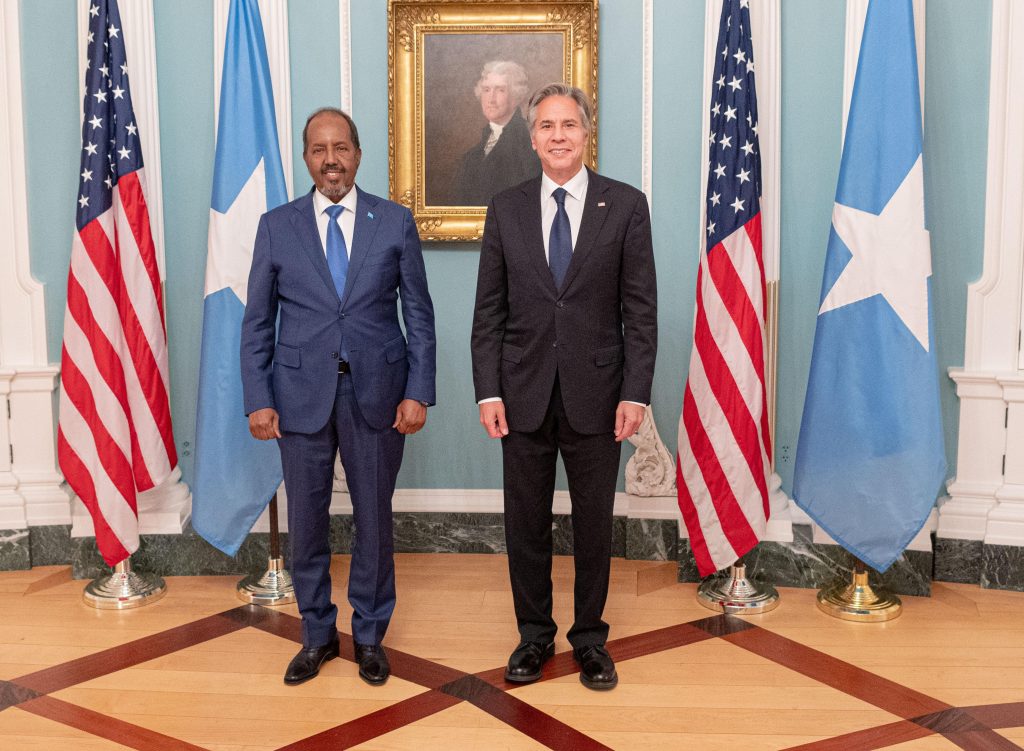
The United States has reversed its earlier decision to withdraw support for United Nations logistical operations backing African Union forces in Somalia, offering renewed support for another year as the country continues to face serious security and political challenges.
In a statement reported by Agence France-Presse (AFP) on Monday, 16 November, the US State Department said Washington had decided to support a one-year renewal of the mandates of the United Nations Support Office in Somalia (UNSOS) and the African Union Support and Stabilization Mission in Somalia (AUSSOM).
The announcement marks a significant change from Washington’s earlier position, which had threatened the future of the logistical support system sustaining African Union military operations in the country.
The decision comes at a particularly sensitive moment for Somalia, where the government continues to confront Al-Shabaab, political disagreements remain unresolved, and questions are growing over the future of international military support.
Although the announcement provides temporary relief, it does not amount to an indefinite commitment from Washington. The US State Department has stressed that Somalia and the African Union must work towards more sustainable regional security arrangements.
Why UN support matters to Somalia’s security operations
The importance of the American decision lies partly in the role played by UNSOS, the United Nations office responsible for providing logistical assistance to African Union forces operating in Somalia.
While AUSSOM carries out military and security operations, UNSOS provides much of the essential logistical infrastructure that allows those forces to remain operational.
Its responsibilities include supplying food, water and fuel, providing medical services, arranging troop transportation, supporting engineering operations and maintaining communications and equipment.
Without these services, military deployments become significantly more difficult and expensive to sustain.
According to the United Nations, UNSOS is authorised to provide logistical support to up to 11,826 uniformed AUSSOM personnel, including 680 police officers. It also supports designated Somali security personnel involved in joint or coordinated operations with the African Union mission.
The arrangement is therefore not simply an administrative relationship between two international organisations. It is an important part of the operational structure supporting Somalia’s security campaign.
The UN Security Council extended AUSSOM’s authorisation through 31 December 2026 under Resolution 2809 (2025). The latest American announcement comes as the mission’s future mandate and financing arrangements require renewed international attention.
Washington’s earlier decision raised concerns
The latest announcement follows months of uncertainty surrounding American financial support for international operations in Somalia.
In July 2026, Washington communicated its intention to discontinue support for UNSOS beyond the existing authorisation period. The decision raised concerns among diplomatic officials and security analysts about the ability of African Union forces to continue operating without reliable logistical assistance.
In September, Reuters reported that the United States had agreed to allow a 12-month drawdown period for UNSOS rather than an immediate termination of its operations.
That arrangement was intended to provide time for Somalia and its international partners to prepare alternative support arrangements.
However, it did not resolve the underlying financial problem.
The United States had argued that Somalia needed to demonstrate greater progress in its campaign against Al-Shabaab, assume greater responsibility for its own security and undertake meaningful security-sector reforms.
The latest decision therefore represents a notable change in Washington’s immediate approach.
According to AFP, the State Department said renewed support would help contain threats originating from Somalia and prevent a wider regional security crisis that could undermine American interests.
However, Washington has also made clear that its commitment is not indefinite.
Al-Shabaab remains a major security challenge
The funding debate comes as Somalia continues to face an insurgency that has affected the country for more than two decades.
Al-Shabaab, an al-Qaeda-linked armed group, continues to conduct attacks against military positions, government institutions and civilian targets.
Despite years of military operations involving Somali forces and international partners, the group retains the capacity to carry out coordinated attacks and maintain influence in parts of central and southern Somalia.
The security situation has also been complicated by setbacks in previous military offensives.
AFP reported that territorial gains made by the government following President Hassan Sheikh Mohamud’s return to office in 2022 were largely reversed by subsequent Al-Shabaab counter-offensives.
The group has also continued to exploit security weaknesses and political divisions within the country.
For Somalia, the challenge is not only to conduct military operations but also to maintain control over recovered areas, strengthen local administration and prevent armed groups from returning.
This requires sustained security investment, effective coordination and a long-term strategy that extends beyond battlefield operations.
Uganda’s planned withdrawal adds pressure
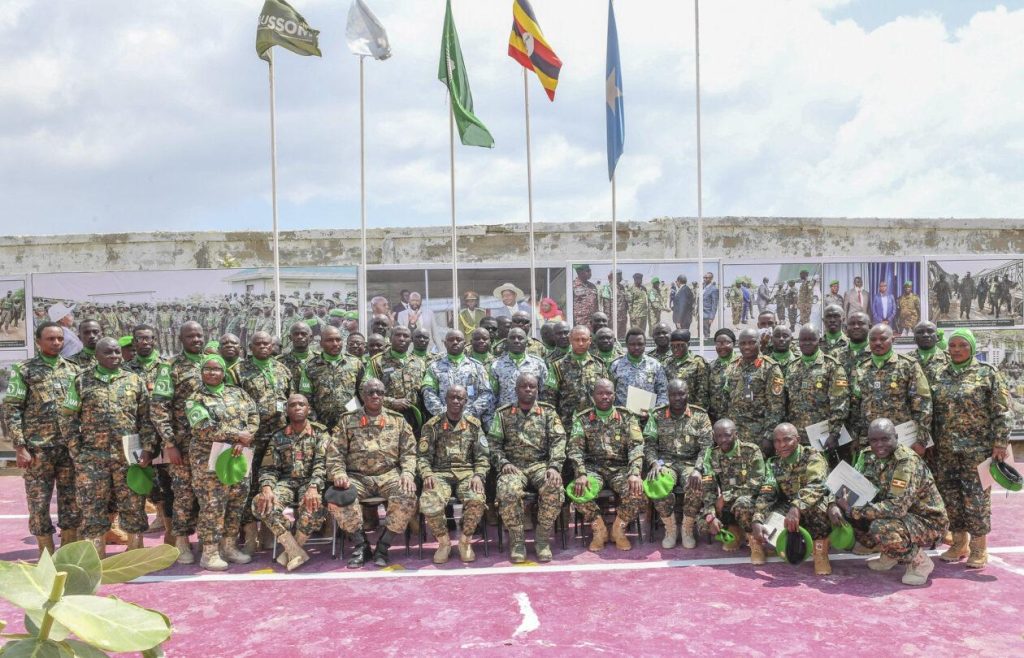
Another development complicating the future of AUSSOM is Uganda’s decision to gradually withdraw its military personnel from Somalia.
Uganda has been one of the most important troop-contributing countries to international security operations in the country, maintaining a military presence since 2007.
On 2 November, Uganda announced that it had begun withdrawing troops deployed under a bilateral arrangement with Somalia’s Federal Government.
The Ugandan military also indicated that the wider withdrawal, including personnel serving under AUSSOM, would be completed by the end of 2027.
According to Reuters, Uganda has approximately 4,500 troops deployed in Somalia under AUSSOM, although the exact number of personnel serving under separate bilateral arrangements is not clear.
The withdrawal raises questions about the future distribution of military responsibilities, particularly in areas where Ugandan forces have played an important role in maintaining security.
The Associated Press also reported that AUSSOM was planning to take over several positions near Mogadishu previously occupied by departing Ugandan troops, in an effort to prevent Al-Shabaab from exploiting potential security gaps.
This development highlights the difficulty of managing a military transition while the insurgency remains active.
Even with renewed international logistical support, replacing departing troops and maintaining operational capacity will require additional planning, resources and coordination.
Political divisions create another obstacle
Somalia’s security challenges cannot be separated from its political situation.
The Federal Government and several opposition figures and regional administrations remain divided over constitutional amendments, electoral arrangements and the country’s political direction.
These disagreements have complicated efforts to establish a unified political position on national priorities.
The United Nations Security Council’s November 2026 assessment identified unresolved disagreements over constitutional changes, presidential term extensions and regional electoral arrangements as major obstacles to political progress.
The report also highlighted the importance of dialogue between the Federal Government and Federal Member States.
These divisions are significant because the fight against Al-Shabaab requires cooperation across different levels of government.
Military operations alone cannot establish lasting stability without functioning institutions, effective local governance and agreement over the country’s political future.
International partners have repeatedly emphasised the importance of Somali ownership of security responsibilities, but achieving that objective requires a functioning political and institutional framework.
What does the American decision mean for Somalia?
The renewed American support offers an important opportunity to avoid an immediate disruption to the international security arrangements supporting Somalia.
It gives the African Union and Somali authorities additional time to address financial uncertainty, plan for troop transitions and strengthen the country’s own security institutions.
However, several questions remain unanswered.
First, the practical financial arrangements behind the renewed support need to be clarified. Supporting a one-year mandate does not automatically resolve every funding gap or guarantee that all operational requirements will be met.
Second, the African Union must prepare for Uganda’s planned withdrawal and ensure that important military positions do not become vulnerable.
Third, Somalia must demonstrate progress in developing security institutions capable of gradually assuming responsibilities currently supported by international partners.
The country’s long-term security cannot depend indefinitely on external military deployments and logistical assistance.
A temporary reprieve, not a permanent solution
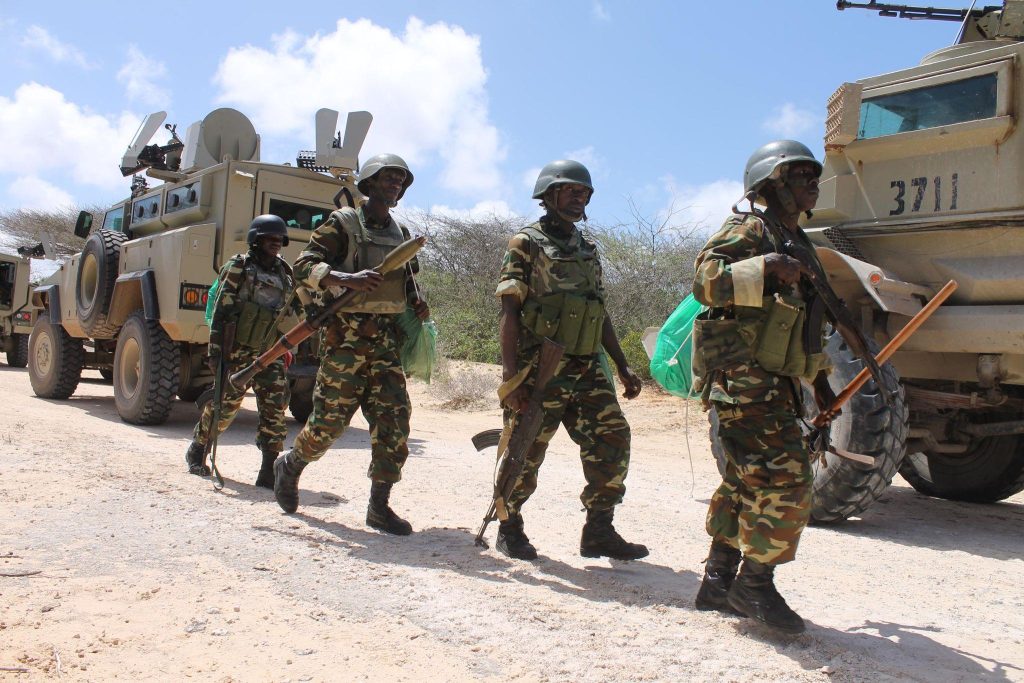
Washington’s decision represents an important development in Somalia’s security landscape, particularly after months of uncertainty over the future of international support.
However, the announcement should not be interpreted as a complete solution to the challenges facing AUSSOM.
The mission continues to confront financial constraints, troop-transition pressures and an insurgency that remains capable of challenging the authority of the Somali state.
For Somalia, the coming months will be critical.
The Federal Government, African Union, United Nations and international partners will need to establish a credible financing and security-transition framework that prevents operational gaps while strengthening Somali security institutions.
Ultimately, the success of international support should be measured not simply by how long foreign forces remain in Somalia, but by whether the country develops the capacity to protect its territory, maintain stability and manage its own security.
Washington may have bought Somalia more time. The greater challenge now is ensuring that the country uses it to build a security system capable of standing on its own.