Rigathi Gachagua’s campaign visit to Nairobi’s Somali commercial heart has exposed a contradiction at the centre of Kenya’s ethnic politics: the claim to represent communities through ethnic identity while seeking the votes of those previously caught in the crossfire of divisive rhetoric.
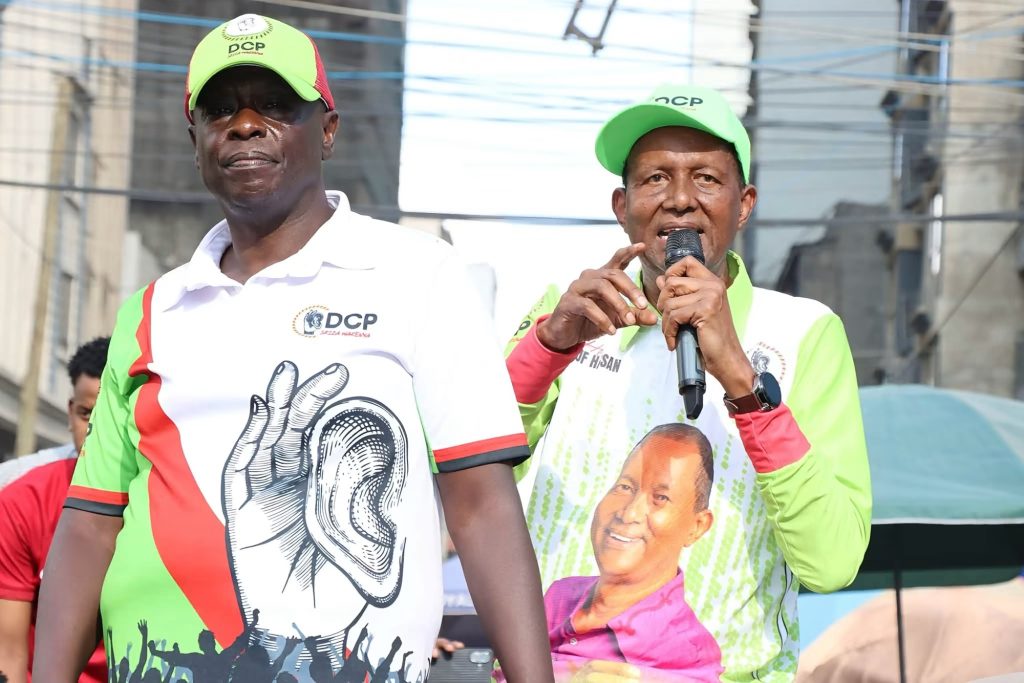
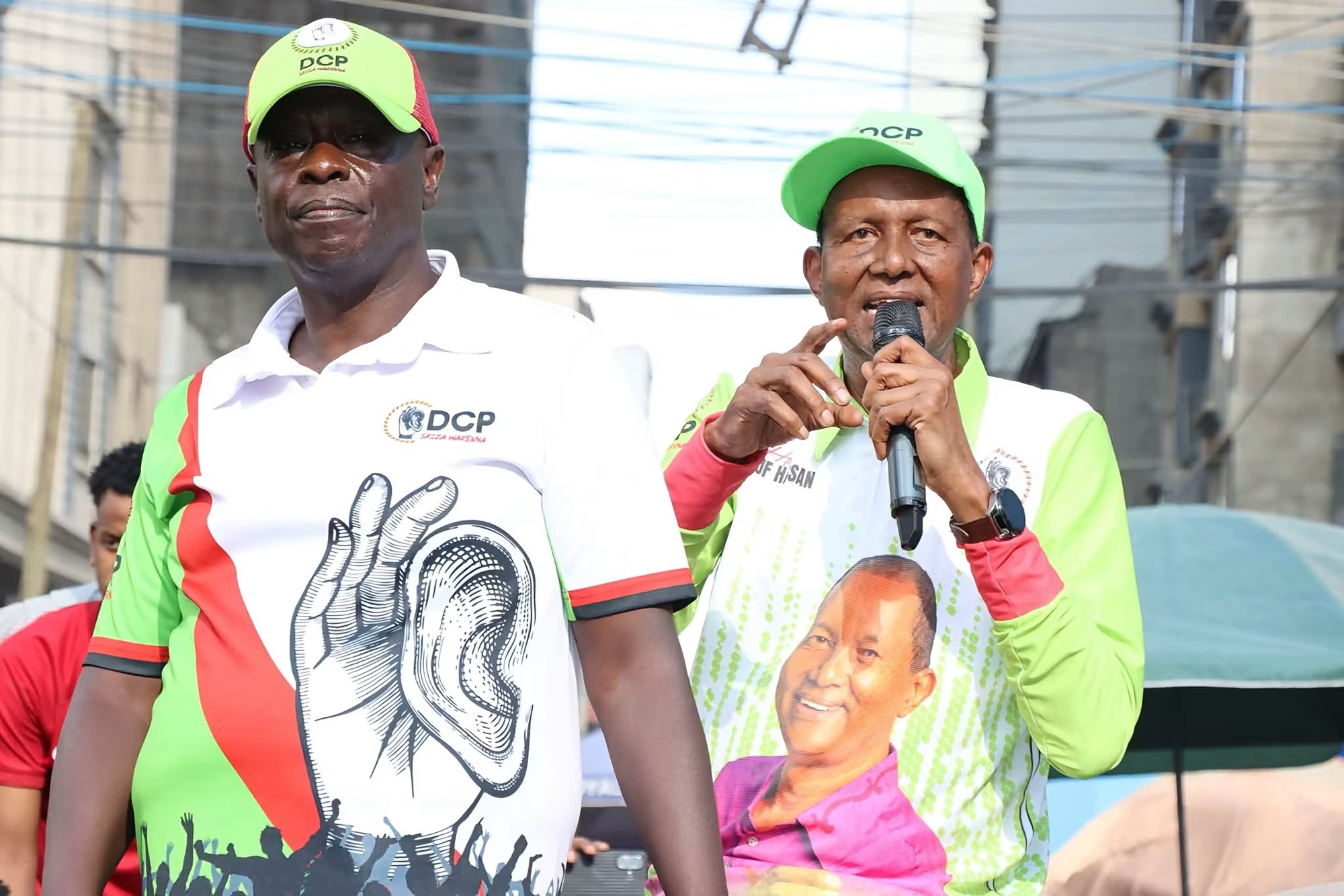
NAIROBI — When former Deputy President Rigathi Gachagua arrived in Eastleigh on Thursday, November 26, accompanied by Kamukunji MP Yusuf Hassan, he came with a familiar campaign message: unity, economic cooperation and a promise to defend the interests of the Somali community.
It was a striking political moment.
Only days earlier, during an interview with Citizen TV’s Jeff Koinange, Gachagua had asserted his authority as a leader of the Kikuyu community. Challenging the journalist over his decision to interview Health Cabinet Secretary Aden Duale, Gachagua questioned why Duale had been given a platform, presenting him as a representative of the Somali community.
Gachagua’s words and conduct during that interview raised a broader question about the place of ethnic identity in Kenyan public life. Why should a journalist’s professional decisions be subjected to the authority of a politician claiming to represent an ethnic community? And why should another public official’s appearance on television become a question of which community he represents?
The irony became particularly apparent when Gachagua subsequently travelled to Eastleigh to seek the political support of Somali traders and residents.
A politician who had asserted his authority as a representative of one ethnic community was now asking another community to embrace his political movement.
The politics of ethnic representation
Kenya’s political history is deeply shaped by ethnic mobilisation. Politicians have frequently presented themselves as defenders of particular communities, sometimes turning legitimate concerns about representation and historical exclusion into instruments of political competition.
Gachagua’s exchange with Koinange brought this problem into sharp focus. His assertion that he was the journalist’s community leader, accompanied by his insistence that Koinange submit to his authority, raised uncomfortable questions about whether political leadership should be understood through citizenship and constitutional responsibility or ethnic allegiance.
The criticism of Koinange was especially revealing because it suggested that inviting a Somali public official to a television programme required an explanation to a politician claiming to speak for the Kikuyu community.
Duale, like other Kenyan public officials, has a right to participate in national political and media conversations without being reduced to an ethnic representative.
The same principle applies to Gachagua. He has every right to seek political support in Eastleigh, but the community has an equally legitimate right to scrutinise his record and the consistency of his message.
A campaign visit followed by disturbing scenes
The political controversy surrounding the Eastleigh visit was compounded by reports of looting and attacks on businesses in the commercial district following the campaign event.
Footage circulated on social media, reportedly showing individuals wearing Democracy for Citizens Party clothing and merchandise looting shops. Health Cabinet Secretary Aden Duale subsequently condemned the incidents, accusing individuals associated with Gachagua’s political movement of terrorising traders and destroying private property.
Duale warned that political ambition and ethnic identity could not justify violence against innocent people or the theft of their livelihoods. He also vowed that the incidents would not go unchecked.
The allegations require proper investigation. Those responsible should be identified through credible evidence and held individually accountable. Wearing a party shirt or attending a political rally does not, by itself, establish criminal responsibility.
But the timing of the reported incidents raises an important question for political leadership: what responsibility do political movements have for ensuring that their mobilisation does not expose local communities and businesses to intimidation, violence or disorder?
Eastleigh is not merely a political venue. It is a commercial district sustained by thousands of traders, employees, transport operators and families. Its businesses should never become collateral damage in the pursuit of political influence.
For a community whose commercial contribution is central to the neighbourhood’s identity, the protection of property and personal safety is not a minor political issue.
The memory of previous controversies
Gachagua’s visit also takes place against the background of previous controversies involving his remarks about Somali-owned businesses.
In January 2026, the owners of Business Bay Square (BBS Mall) sought intervention from the National Cohesion and Integration Commission following remarks by Gachagua linking alleged proceeds from a Minnesota fraud scheme to investments in Eastleigh.
The mall’s owners argued that the statements unfairly associated their property and Somali businesses with criminal activity. Gachagua defended his remarks, maintaining that his criticism concerned an individual businessman rather than the Somali community as a whole.
The complaint itself should not be confused with a judicial finding. Nevertheless, the controversy demonstrated how quickly statements about individual allegations can acquire an ethnic dimension when public figures make them in an already polarised political environment.
Against that history, Gachagua’s appearance in Eastleigh, praising Somali entrepreneurs and appealing for their support, inevitably invites scrutiny.
Political reconciliation is possible, and political positions can change. But rebuilding confidence requires more than a campaign speech. It requires consistency, acknowledgement of legitimate concerns and a demonstrated commitment to protecting the dignity and rights of every Kenyan community.
Somali voters are not an electoral bargaining chip
There is another important dimension to this political encounter: the assumption that Eastleigh’s Somali population can be mobilised through appeals to ethnic friendship or commercial relationships.
The Somali community is not politically homogeneous. It includes business owners, professionals, young people, workers, religious leaders and citizens with different political opinions and priorities. Its votes cannot reasonably be treated as the property of any politician or political party.
Nor should the community be expected to exchange its political support for expressions of goodwill during election campaigns.
Kenya’s Somali citizens have legitimate national interests that extend far beyond Eastleigh’s commercial streets. These include equitable distribution of national resources, investment in education and healthcare, infrastructure, employment opportunities, security, representation and equal treatment under the law.
For decades, communities in Northern Kenya have raised concerns about historical marginalisation and unequal development. The constitutional promise of devolution and equitable resource allocation was intended, in part, to address these longstanding disparities.
The question facing political leaders is whether they are prepared to defend these principles consistently, rather than invoke them when seeking electoral support.
The Somali community should be able to demand accountability from its own elected representatives while also expecting fairness from politicians seeking national leadership.
The choice is about the kind of Kenya being built
Aden Duale’s response to the Eastleigh incidents has placed the protection of Somali traders and the question of national cohesion at the centre of the political dispute. His warning that violence and the destruction of property would not go unchecked is a reminder that political competition must remain within the boundaries of the law.
But the issue extends beyond the disagreement between two politicians.
Kenya cannot build a united nation if its political culture encourages leaders to claim authority over citizens on the basis of ethnicity, while treating other communities as electoral constituencies to be approached when votes are needed.
A genuinely national political movement must demonstrate that it can protect the rights of all citizens, regardless of their ethnic identity, political affiliation or economic background.
The Somali community’s political choices should therefore be guided by its long-term interests and the wider national interest, not by campaign promises or temporary political alliances.
Its votes should be used thoughtfully to advance a united Kenya, equitable sharing of national resources and balanced development across all regions. It should never be expected to endorse a political system that marginalises communities, singles them out for suspicion or treats their businesses and livelihoods as expendable.
Eastleigh has spent decades demonstrating that communities can live, work and prosper together. Its commercial success is itself an argument for a Kenya built on cooperation rather than ethnic competition.
Gachagua is entitled to seek the Somali vote. Somali voters are equally entitled to ask what has changed, what he stands for today and whether his conduct matches his promises.
The test of political leadership is not how warmly a politician is received during a campaign visit. It is whether the principles he promotes remain the same when the cameras are switched off and the votes are no longer needed.
Eastleigh should not have to choose between political alliances and its dignity. And Kenya’s Somali citizens should never have to surrender their demand for equal citizenship in exchange for recognition from those seeking power.