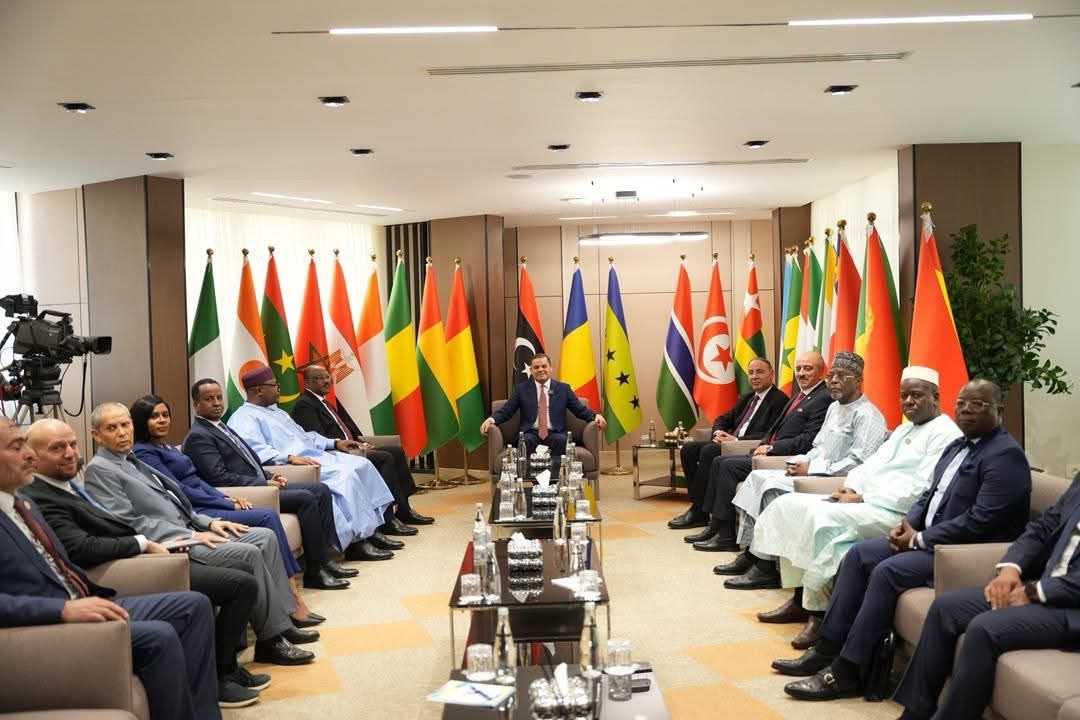
A push for stronger maritime links with Riyadh comes as Mogadishu confronts a deepening diplomatic dispute with the United Arab Emirates, raising the strategic importance of its relationships across the Gulf.
Somalia is seeking to strengthen its economic and diplomatic relationship with Saudi Arabia at a time when tensions between Mogadishu and Abu Dhabi are reshaping political alignments across the Horn of Africa.
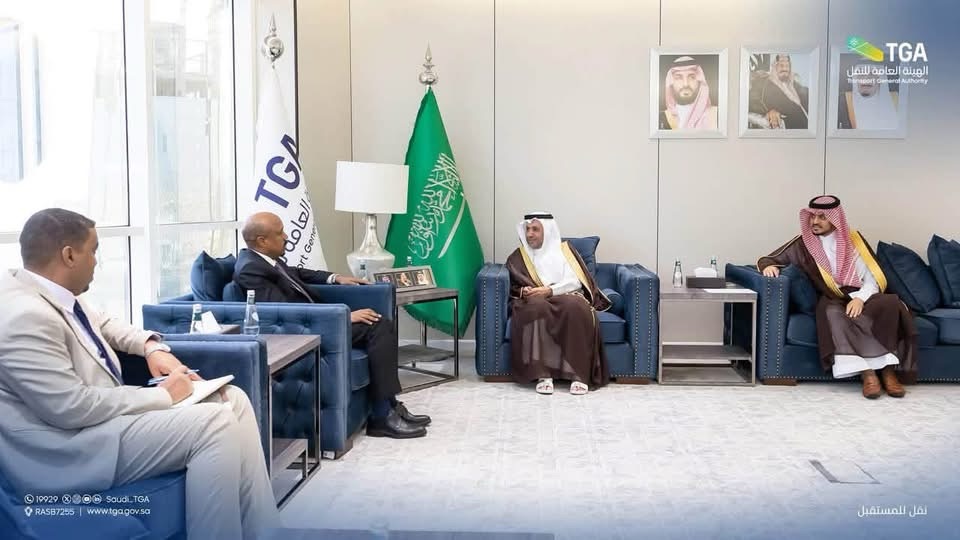
The latest indication came during a meeting in Riyadh between Somalia’s ambassador, Mohamed Amin Sheikh Osman, and Engineer Fawaz Al-Suhli, chairman of Saudi Arabia’s General Transport Authority. The discussions focused on expanding cooperation between the two countries, particularly maritime transport.
The meeting may have centred on shipping and transport, but its significance extends beyond the commercial relationship. For Somalia, closer maritime cooperation with Saudi Arabia offers an opportunity to strengthen trade connections, attract investment and develop an economic partnership with an influential regional power. For Riyadh, engagement with Mogadishu reinforces its interests along the Red Sea and the Gulf of Aden, two increasingly important corridors for international trade and security.
The timing is particularly significant. Somalia’s relationship with the United Arab Emirates has deteriorated following disagreements over sovereignty, security arrangements and Abu Dhabi’s engagement with regional actors. As the dispute has intensified, Saudi Arabia’s position in the region has become increasingly relevant to Mogadishu’s diplomatic calculations.
A relationship built on more than diplomacy
Somalia and Saudi Arabia have longstanding religious, commercial and political connections. Saudi Arabia is an important destination for Somali livestock exports, while the two countries share interests in Red Sea security, regional stability and the protection of maritime trade.
Their relationship has also developed a stronger political dimension. Riyadh has publicly reaffirmed its support for Somalia’s sovereignty, unity and territorial integrity, principles that have become central to Mogadishu’s foreign policy as tensions over the country’s territorial status have grown.
For Somalia, this diplomatic alignment matters. Its geographical position gives it strategic importance, but translating that advantage into economic development requires partnerships capable of delivering investment, infrastructure and access to international markets.
Maritime cooperation could provide a practical starting point.
Improved shipping connections between Somali ports and Saudi Arabia could facilitate livestock exports, reduce commercial barriers and create opportunities in port management, logistics and maritime services. It could also encourage investment in the infrastructure needed to make Somalia a more competitive trading destination.
The challenge is ensuring that such cooperation moves beyond diplomatic announcements and produces tangible economic results.
The UAE dispute and Saudi Arabia’s regional calculations
Somalia’s deteriorating relationship with the UAE has unfolded against a wider divergence between Abu Dhabi and Riyadh over regional influence and security.
The two Gulf countries have historically maintained close relations, but their interests have increasingly differed, including over Yemen and their respective approaches to political and security partnerships across the Middle East and the Horn of Africa.
For Mogadishu, the UAE dispute is fundamentally a question of national sovereignty. The Federal Government has challenged arrangements it considers inconsistent with its authority, particularly those involving ports, security and engagement with regional administrations.
The UAE, meanwhile, has maintained substantial commercial and strategic interests in the Horn of Africa. Its investments and relationships across the region give it considerable influence, making the disagreement with Somalia particularly consequential.
Saudi Arabia’s position is therefore important, but it should not be oversimplified.
Riyadh has publicly supported Somalia’s territorial integrity. Its growing engagement with Mogadishu is consistent with that position. Saudi Arabia has also strengthened cooperation with other influential regional actors, including Egypt and Turkey, whose governments have emphasised the importance of Somalia’s federal institutions and territorial unity.
However, Saudi Arabia has not formally declared itself a party to Somalia’s dispute with the UAE. Its relationship with Abu Dhabi remains important, and Riyadh has its own economic and security interests to protect.
The distinction matters. Somalia may find common ground with Saudi Arabia on sovereignty and regional security without assuming that every aspect of Saudi foreign policy will automatically align with Mogadishu’s interests.
The strategic importance of Somalia’s coastline
Somalia’s coastline is among the longest in Africa, stretching along the Gulf of Aden and the Indian Ocean. Its proximity to major international shipping routes gives the country significant potential in maritime commerce.
Yet that potential remains constrained by limited infrastructure, weak logistics capacity and insufficient investment.
A stronger partnership with Saudi Arabia could help address some of these challenges. Cooperation in shipping, port development, customs administration and maritime training would support Somalia’s ambition to become a more significant commercial link between the Horn of Africa and the Gulf.
Livestock exports are an especially important area. Saudi Arabia is a major market for Somali animals, and more efficient maritime arrangements could benefit exporters, traders and pastoral communities.
There is also a broader security dimension. Instability around the Red Sea and the Gulf of Aden has demonstrated how vulnerable international trade can be to regional conflict. Somalia has a direct interest in the security of these waters, not simply because of its geography but because maritime stability is essential to its economic future.
Mogadishu must avoid becoming a theatre for Gulf competition
The growing importance of Saudi Arabia’s relationship with Somalia presents an opportunity, but it also carries risks.
Somalia should not allow competition between Gulf powers to determine its foreign policy. Its relationships with Saudi Arabia, the UAE, Qatar, Turkey and other regional partners should be guided by clearly defined national interests rather than external rivalries.
That requires a consistent diplomatic position: international partnerships are welcome, investment is encouraged and security cooperation is necessary, but agreements involving Somalia’s national interests must respect its sovereignty and constitutional institutions.
The government must also demonstrate that it can manage these relationships through effective institutions and a coherent national strategy. Diplomatic support alone will not develop Somali ports, expand exports or create employment.
The meeting in Riyadh is therefore best understood as part of a broader opportunity to strengthen Somalia’s economic and strategic position.
Saudi Arabia has the financial capacity, regional influence and commercial interests to become an important partner in Somalia’s maritime development. Mogadishu, in turn, has a geographical position that makes it relevant to the security and prosperity of the wider Red Sea region.
The question is whether both governments can translate their shared interests into a durable economic partnership.
For Somalia, the objective should be clear: to turn diplomatic relationships into investment, strategic geography into commercial opportunity, and international support for its sovereignty into greater national economic strength.